

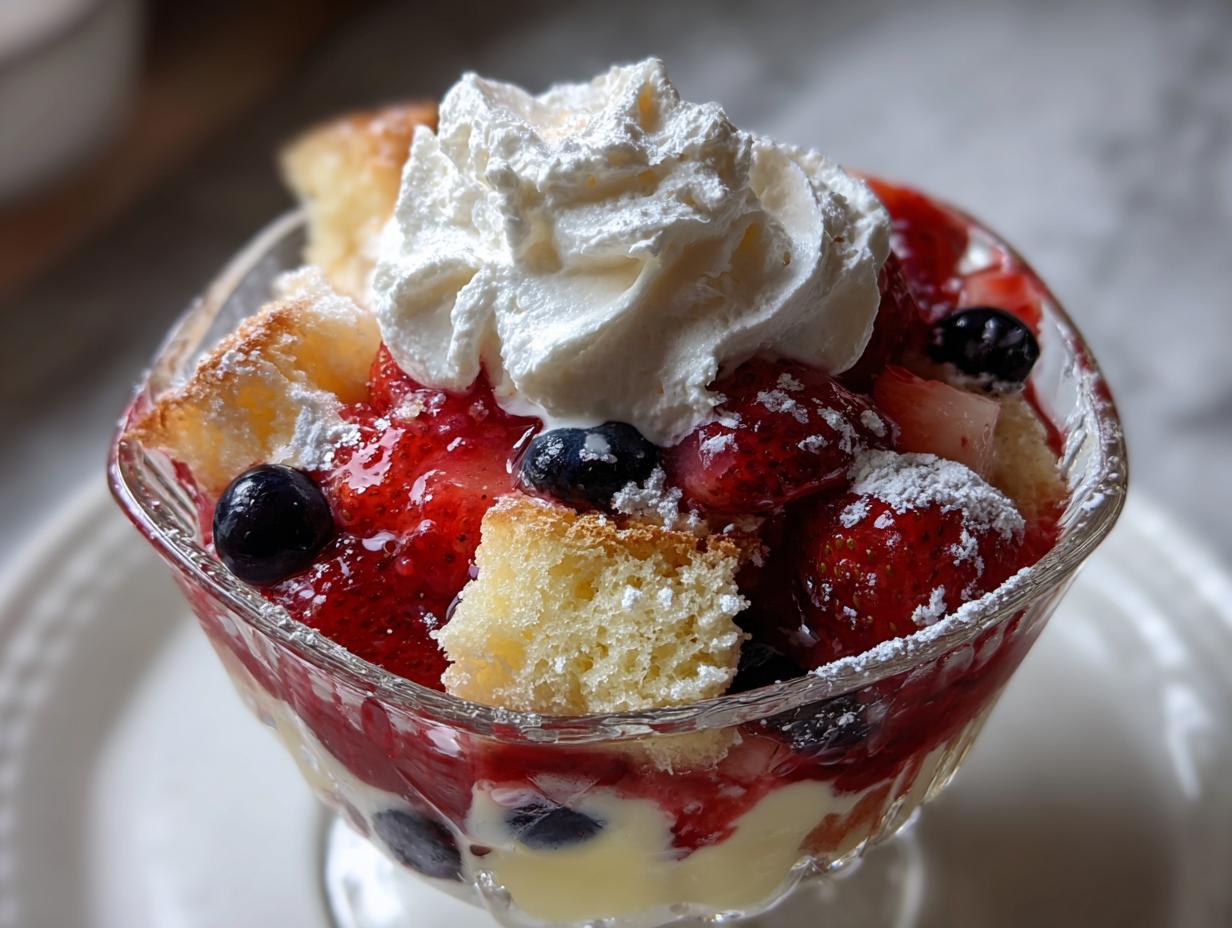
You know those desserts that just stop the conversation when you bring them out? The ones that are practically begging for a camera phone picture before anyone digs in? That’s the trifle. Seriously, nothing says ‘celebration’ like a towering glass vessel full of contrasting colors—golden cake, ruby fruit, creamy yellow custard, and dazzling white peaks of cream.
At Kitchen Slang, we translate chef secrets into home cooking wins, and trifle is the ultimate example of that. It looks incredibly complex, right? But trust me, it’s mostly just assembly. We’re taking this classic English trifle dessert and showing you the flow—the rhythm of layering so you can build a showstopper without breaking a sweat or needing a culinary degree. This is pure, delicious theater on a spoon, and it’s easier than you think!

- Why This Layered Fruit Custard Trifle is Your Next Go-To Dessert
- Ingredients for the Perfect English Trifle Dessert
- Assembling Your Beautiful Trifle: Step-by-Step Instructions
- Choosing the Right Trifle Bowl Recipe Presentation
- Making Variations on the Classic Trifle
- Tips for Success When Making an English Trifle Dessert
- Storage and Make-Ahead Advice for Your Trifle
- Frequently Asked Questions About Trifle
- Estimated Nutritional Data for Classic Trifle
- Share Your Kitchen Slang Success
- Estimated Nutritional Data for Classic Trifle
- Share Your Kitchen Slang Success
Why This Layered Fruit Custard Trifle is Your Next Go-To Dessert
When I’m planning a big gathering, I always reach for a trifle recipe because it hits all the right notes without stressing me out. It’s like the ultimate make-ahead winner. You get all the applause because it’s so visually stunning sitting on the counter, but you did the heavy lifting hours before everyone arrived.
Here’s why this dessert is foolproof:
- It’s inherently festive. That tall glass bowl and the defined stripes just scream ‘special occasion’—think Christmas trifle vibes year-round!
- Zero baking time for the final assembly. We use pre-made cake, so you skip the oven entirely.
- It tastes better the next day! The flavors meld together perfectly overnight.
- Everyone gets a bit of everything. One perfect scoop delivers cake, custard, fruit, and cream. What’s not to love?
Ingredients for the Perfect English Trifle Dessert
Okay, let’s talk about what you actually need to make this stunning layered fruit custard trifle visible. The magic of the trifle lies in using good elements and making sure they stack up right. I’ve listed them out below, grouped by function so you can shop or prep smart. It looks like a lot, but it comes together fast!
- Pound Cake or Ladyfingers: You need about one pound, cut into nice 1-inch cubes. This is our sturdy foundation!
- Sherry or Juice: About 1/2 cup of sweet sherry. If you’re keeping it family-friendly, look for raspberry or orange juice.
- Vanilla Custard: Three cups of good vanilla custard. This is where we cheat a little sometimes, and I won’t judge!
- The Fruit: Two cups of mixed berries—I usually freeze mine because they break down just enough when they thaw under the custard.
- The Sweet Barrier: About 1/4 cup of raspberry jam. It needs to warm up just slightly so it flows nicely over the cake.
- For the Cloud Top: Two cups of heavy whipping cream.
- Cream Sweetener: Two big tablespoons of powdered sugar for the cream.
- Flavor Boost: Just one teaspoon of pure vanilla extract for the topping.
- Garnish: Some crunchy almond slivers or maybe some finely shaved dark chocolate.
Tips for Selecting Your Trifle Components
This is the part where you get to decide how authentic versus how fast you want to go, and there are no wrong answers here! My philosophy is always about getting great flavor easily.
For the cake base, my heart leans toward a dense pound cake. It soaks up the sherry beautifully without completely dissolving into mush. If you use store-bought ladyfingers, they work great, but they are often lighter, so be careful not to over-soak them, or you’ll have syrup instead of a cake layer. You want texture!
Now, the custard—the absolute star alongside the fruit. If you’re on a strict timeline, don’t stress about making a crème anglaise from scratch; a high-quality store-bought vanilla custard or even thickening up instant vanilla pudding mix works perfectly well for such a layered dessert. The crucial thing is that whatever you use must be chilled solid before you layer it. Warm custard will melt right into the cream layer and make a mess!
Assembling Your Beautiful Trifle: Step-by-Step Instructions
This is where the magic happens! If you look at a recipe like this and feel overwhelmed, remember what I said about translation. We aren’t cooking; we are stacking! The trick to a stunning trifle is patience between steps. Don’t rush the layers; they need to settle to look sharp through that glass.
Building the Base Layers of the Trifle
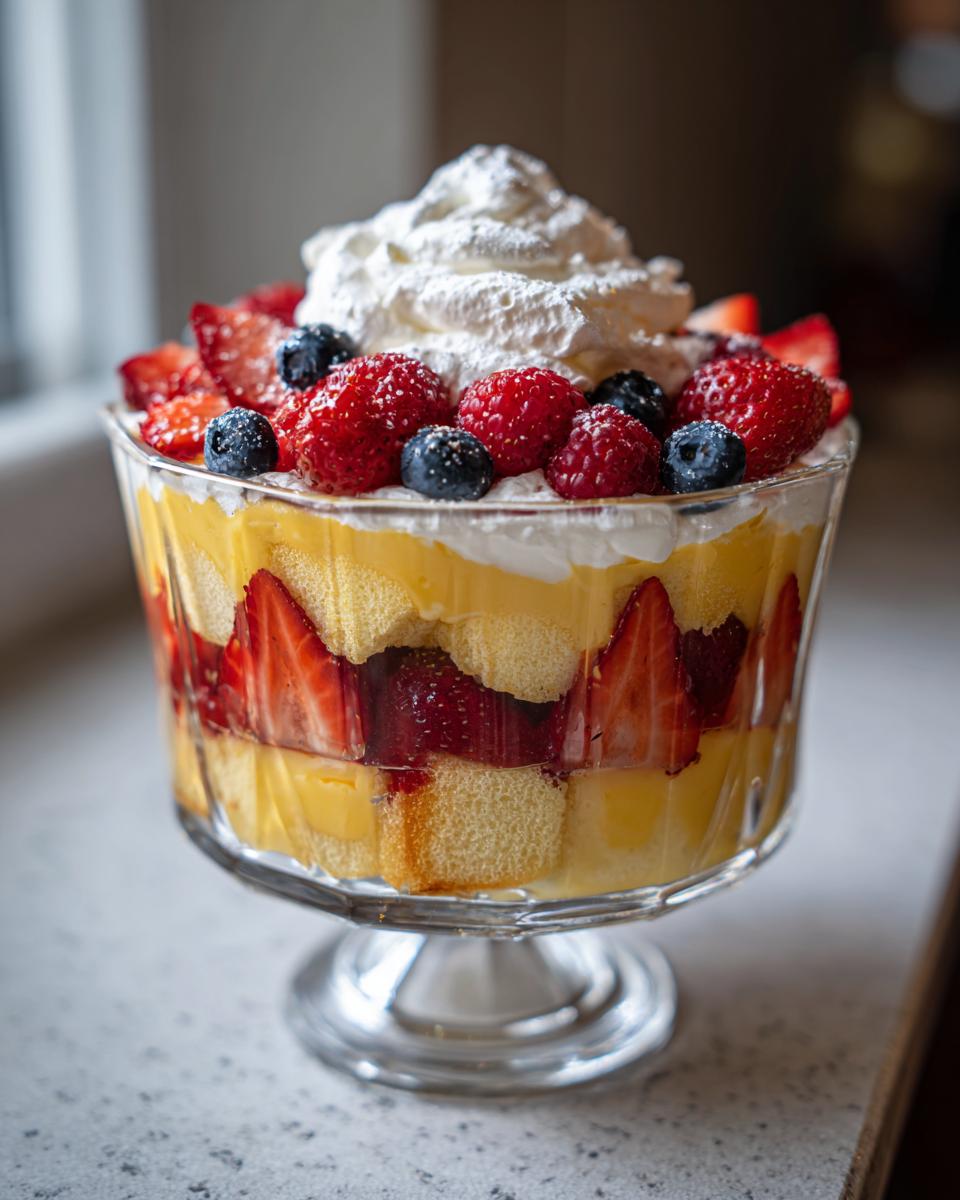
Get your biggest, sparkliest glass bowl—that’s your canvas—and start with half of those cubed pound cake pieces settled gently on the bottom. Don’t smash them down, okay? We want them airy! Now, drizzle half of your sherry or juice evenly over that cake. It should look damp, not swimming. Next comes the warmed-up jam, spread lightly—this keeps the sherry flavor locked in. Finally, carefully spoon half of your chilled custard right over the jam. Just let it spread its creamy goodness across the top.
Finishing the Trifle Layers and Chilling
Now we just repeat the whole amazing process. Add your second layer of cake cubes, the rest of your wetting agent, the remaining jam, and finally, the rest of that thick, gorgeous custard. This is the critical moment where you step back and say, “Wow.” Then, cover it up and get it into the fridge for at least two hours. This chilling time isn’t optional, in my book! It lets the cake fully absorb the liquid without collapsing, and it helps the custard set up so your layers don’t slide into each other when you serve it.
The Cream Topping and Garnish for Your Trifle
While that’s chilling, whip up your heavy cream with the powdered sugar and vanilla until you hit those stiff peaks. You want that cream to hold its shape like a fluffy white mountain range! Once the trifle is set, gently spread that whipped cream right over the top custard layer. For presentation points, if you didn’t already press some sliced strawberries against the sides of the glass bowl earlier, now is the time to sprinkle on those almond slivers or chocolate shavings. That contrast is what makes the whole trifle pop!

Choosing the Right Trifle Bowl Recipe Presentation
Honestly, you can have the most delicious combination of sherry, custard, and cake in the world, but if it’s hidden away in an opaque container, you’ve failed the visual test! The whole point of a classic trifle is the drama of the cross-section—that perfect horizontal stripe of color. That’s why you absolutely need a clear glass bowl. It’s not just a bowl; it’s part of the recipe structure itself.
I learned this the hard way early on. The first time I made one for a big family dinner, I used my favorite opaque ceramic serving bowl because I was worried about breaking glass. Big mistake! Everything looked like a homogenous pale-yellow swamp by the time it hit the table. My Aunt Carol actually asked me if it was some kind of bread pudding. Ouch! I realized then that presentation is half the battle with this dessert.
When you’re layering, take an extra minute to make sure each layer respects the one beneath it. If you’re using fruit, really press those sliced strawberries or raspberries gently against the glass walls before you pour in the liquid or custard. This is the trick professional pastry chefs use to make the colors really pop outwards. When you serve it, everyone can see exactly what they are digging into—rich cake, bright fruit, smooth custard. It shows you cared about more than just the taste; you cared about the whole experience. It really elevates it from just a dessert to a stunning centerpiece!
If you’re looking for other ways to impress when serving sweet things, check out my pointers on whipped shortbread cookies—they deliver great texture with minimal fuss, too!
Making Variations on the Classic Trifle
I’ve given you my tried-and-true, classic sunny-day English trifle above, but honestly, this dessert is a total chameleon! Don’t feel shackled to the sherry and raspberries if your heart—or your pantry—calls for something different. That’s the beauty of learning the *why* behind the layers; once you know the structure works, you can swap ingredients like crazy! This is where you show off your own kitchen instincts.
If you’ve got holiday leftovers or just a craving for chocolate, you can totally pivot this recipe. For instance, you can create a knockout strawberry custard trifle by skipping the sherry entirely and just using extra strawberry juice or liqueur with fresh sliced strawberries pressed against the glass. It gets brighter and tangier, which is amazing when it’s hot outside.
Or, try tackling a rich winter version. Ditch the standard pound cake; you simply must try substituting it with chunks of fudgy chocolate brownie instead. Seriously, swap the cake cubes for brownie chunks! Then, instead of vanilla custard, use a dark, rich chocolate pudding or even a simple chocolate mousse. Soak the brownies gently with a splash of good brandy instead of sherry. That dark, intense version is what I call my ‘Midnight Trifle,’ and it’s perfect when you need something decadent in the colder months.
The key takeaway is this: as long as you keep the wet soak, the dense crumb layer, the creamy middle (custard or pudding), and the fluffy top (whipped cream), you can change the flavor profile completely. It’s all about translation, remember? Feel free to experiment with spirit choices—a little bourbon mixed with the jam layer in a peach trifle? Yes, please. Go play with your food!
Tips for Success When Making an English Trifle Dessert
I want you to walk away from this feeling like you could assemble a prize-winning English trifle dessert tomorrow. It’s all about mastering a few small moments during assembly. If you nail these three things, I promise your trifle will be structurally sound and taste incredible. Forget fancy techniques; focus on these practical checks.
First, let’s talk about the ‘soak balance.’ This is the number one reason people end up with a soupy dessert instead of delightful layers. When you pour that sherry or juice over the cake base, you want the cubes to look glistening and saturated, but you should NOT see any liquid pooling at the bottom of the bowl. If you do see puddles, you’ve gone too far! Next time, drizzle half the amount and wait 30 seconds, checking the depth. The cake should absorb what it needs, acting like a sponge—not a soaking bathmat!
Secondly, treat the jam as more than just flavor; treat it as glue. That thin layer of warmed jam acts as a seal between the damp cake layer and the cool, heavier custard layer above it. This small step prevents your cake from turning into a total mush pile when it sits overnight. Warm it *just* enough so it spreads easily with the back of a spoon, creating an effective, tasty barrier.
My third, and maybe most important, tip relates to temperature, especially when topping that beautiful structure with whipped cream. Your custard layer needs to be deeply chilled—I mean stone cold. If you try whipping cream and spreading it over lukewarm custard, guess what happens? The cream softens immediately, refuses to hold those stiff peaks, and just melts into the custard layer. You lose that beautiful, fluffy contrast. So, if you’re assembling in stages, make sure the custard has had a good long chill before you bring out the mixer for the cream topping.
Follow those three checks—don’t over-soak, use jam as glue, and ensure the custard is cold—and you’ll have a perfect, textbook **trifle** every single time. That’s the pro knowledge you can use right now!
Storage and Make-Ahead Advice for Your Trifle
One of the greatest things about creating a spectacular trifle is that it’s genuinely best when made ahead of time. Seriously, don’t feel pressured to build this masterpiece right before your guests walk in the door! The flavors actually need time to mingle and marry. That sherry needs a good, long soak into the cake, and the custard firms up beautifully overnight.
So, how far ahead can you go? You can assemble everything up to the whipped cream topping—the cake, the soak, the jam, the fruit, and all the custard—a full 24 hours before you plan on serving it. Cover that bowl tightly with plastic wrap and let it settle happily in the fridge. When it’s layered and chilled like that, the structure is usually fantastic, and you can admire those neat stripes you worked so hard to create.

But here is the absolute golden tip from my kitchen to yours: do NOT add the whipped cream until just before serving, or at most, an hour before. Whipped cream is just air suspended in fat, and it starts weeping and collapsing the moment it sits on top of cold, damp custard for too long. It loses its fluffy texture and just turns into a sad, semi-liquid sheet over the top.
If you are using a store-bought custard base, you might even get away with making the whole thing early on a Friday if you’re serving Saturday night. But for that glorious, stiff-peaked topping? Wait until the last possible moment. Whip the cream, spread it on, do your final garnish of almonds or shavings, and then bring that beautiful, impressive **trifle** right out to the table. It’s the perfect balance of prep work and last-minute flair!
Frequently Asked Questions About Trifle
I know you might still have a few things swirling around in your head after all this layering talk. It’s natural! This classic dessert invites questions because there are so many moving parts. Don’t let a little uncertainty stop you; that’s why we’re here to translate the details. Here are the things I get asked most often about making a perfect **trifle**.
Can I make this Christmas Trifle entirely ahead of time?
Yes! But you have to divide the job into two parts, just like I mentioned before. You can absolutely assemble the entire base—cake, soak, jam, fruit, and custard—the day before your party, maybe even two days before if you’re using good quality, thick custard. Cover it up tightly and let those flavors get friendly in the fridge. The only thing you should save for the absolute last minute—maybe an hour before serving—is that gorgeous whipped cream topping. If you put the cream on too early, it loses its lofty height and just sort of sighs onto the custard. We want happy peaks!
What is the best substitute for sherry in this layered fruit custard trifle?
If you’re avoiding alcohol—or just ran out of sherry, which happens!—you have great options that keep that beautiful fruit flavor shining through. My favorite swap for this layered fruit custard trifle is using just the syrup from a can of good quality fruit, like sliced peaches or pineapple, mixed with a splash of clear vanilla or almond extract. But honestly, for a bright, vibrant flavor, don’t underestimate good old orange juice mixed with a teaspoon of lemon zest. It gives you that necessary wetness without the alcohol content. Keep the amount the same as you would the sherry; the goal is saturation, not swimming!
How do I prevent the cake base from becoming too mushy in the trifle?
This is where the ‘glue’ comes in handy! To avoid a soggy bottom layer, you absolutely must use the warmed jam layer right on top of the soaked cake. The jam acts like a waterproof barrier between the damp stuff and the heavy, cool custard layer going on top. Also, when you’re drizzling your sherry or juice over the pound cake cubes, aim for even distribution rather than pouring one big puddle in the middle. If you see liquid pooling in the bottom of the glass bowl after the first ten minutes, gently press the cake down with the back of a spoon to help it absorb evenly. We want moist crumbs, not cake soup!
If you want to check out some great jams for sealing those layers, I’ve got my favorite recipe for Christmas Jam that works wonderfully here!
Estimated Nutritional Data for Classic Trifle
Because everyone asks, here’s a rough look at the numbers for this classic recipe. Please know that since we allow for substitutions in the cake base and the liquid used, these numbers are just a general guide for planning. They are based on using standard pound cake, milk-based custard, and standard amounts of cream and sugar.
- Serving Size: 1 Serving
- Calories: Approximately 450
- Fat: About 25g
- Carbohydrates: Around 50g
- Protein: Roughly 7g
- Sugar: High, around 40g (Remember, this is a holiday dessert!)
This is a rich dessert, clearly! But remember, cooking is about balance, and sometimes a spectacular, memorable dessert is worth enjoying responsibly. These figures are estimates based on the ingredients listed, and your final nutrition facts will shift depending on the brand of custard or the fat content of your whipping cream.
Share Your Kitchen Slang Success
So, that’s it! You now have all the secrets to translating a fancy-looking dessert into something you can whip up faster than you think. I really hope you give this English trifle dessert a try for your next gathering. Remember, the best part of the trifle is that beautiful moment when the spoon finally digs through all those layers and mixes them together one last time on the plate.
When you make this, take a picture! I want to see your beautiful layers and how you garnished the top. Drop a comment below and let me know: Which layer is your absolute favorite part of the whole dessert? Is it the sherry-soaked cake, or are you all about that creamy topping? Let’s keep the conversation going. If you run into trouble or have a genius substitution, please reach out through my contact page. Happy layering!
Estimated Nutritional Data for Classic Trifle
Because everyone asks, here’s a rough look at the numbers for this classic recipe. Please know that since we allow for substitutions in the cake base and the liquid used, these numbers are just a general guide for planning. They are based on using standard pound cake, milk-based custard, and standard amounts of cream and sugar.
- Serving Size: 1 Serving
- Calories: Approximately 450
- Fat: About 25g
- Carbohydrates: Around 50g
- Protein: Roughly 7g
- Sugar: High, around 40g (Remember, this is a holiday dessert!)
This is a rich dessert, clearly! But remember, cooking is about balance, and sometimes a spectacular, memorable dessert is worth enjoying responsibly. These figures are estimates based on the ingredients listed, and your final nutrition facts will shift depending on the brand of custard or the fat content of your whipping cream.
Share Your Kitchen Slang Success
So, that’s it! You now have all the secrets to translating a fancy-looking dessert into something you can whip up faster than you think. I really hope you give this English trifle dessert a try for your next gathering. Remember, the best part of the trifle is that beautiful moment when the spoon finally digs through all those layers and mixes them together one last time on the plate.
When you make this, take a picture! I want to see your beautiful layers and how you garnished the top. Drop a comment below and let me know: Which layer is your absolute favorite part of the whole dessert? Is it the sherry-soaked cake, or are you all about that creamy topping? Let’s keep the conversation going. If you run into trouble or have a genius substitution, please reach out through my contact page. Happy layering!
PrintClassic English Trifle

Make a beautiful, layered dessert featuring sponge cake soaked in sherry, custard, fruit, and whipped cream, perfect for any gathering.
- Prep Time: 30 min
- Cook Time: 0 min
- Total Time: 2 hours 30 min
- Yield: 8 servings 1x
- Category: Dessert
- Method: Layering
- Cuisine: British
- Diet: Vegetarian
Ingredients
- 1 pound pound cake or ladyfingers, cut into 1-inch cubes
- 1/2 cup sweet sherry or fruit juice (like orange or raspberry)
- 3 cups prepared vanilla custard (store-bought or homemade)
- 2 cups mixed fresh or frozen berries (strawberries, raspberries)
- 1/4 cup raspberry jam, warmed slightly
- 2 cups heavy whipping cream
- 2 tablespoons powdered sugar
- 1 teaspoon vanilla extract
- Almond slivers or chocolate shavings for garnish
Instructions
- Arrange half of the cake cubes in the bottom of a large glass trifle bowl.
- Drizzle half of the sherry or juice evenly over the cake layer. Press down gently.
- Spread half of the warmed jam over the soaked cake layer.
- Carefully spoon half of the custard evenly over the jam layer.
- Repeat the layering process: remaining cake cubes, remaining sherry, remaining jam, and remaining custard.
- Chill the trifle for at least 2 hours, or until the custard is set.
- In a separate bowl, whip the heavy cream, powdered sugar, and vanilla extract until stiff peaks form.
- Spread the whipped cream evenly over the top custard layer.
- Garnish the top with almond slivers or chocolate shavings before serving.
Notes
- If you want a brighter color contrast, use sliced strawberries pressed against the glass sides before adding the custard layers.
- For a non-alcoholic version, use orange juice or cranberry juice instead of sherry.
- You can substitute instant vanilla pudding mix for homemade custard to save time.
Nutrition
- Serving Size: 1 serving
- Calories: 450
- Sugar: 40g
- Sodium: 150mg
- Fat: 25g
- Saturated Fat: 15g
- Unsaturated Fat: 10g
- Trans Fat: 0.5g
- Carbohydrates: 50g
- Fiber: 2g
- Protein: 7g
- Cholesterol: 80mg