


Let’s talk about the elephant in the holiday kitchen: the dreaded fruit cake. Seriously, I know! People either passionately love them or actively run screaming when they see one. Me? I’m firmly in the ‘love it’ camp, but only if it avoids being a dry, heavy brick. I’ve spent years translating those intimidating, old-world recipes into something that works for *us*—the busy home cooks. That’s the whole point of Kitchen Slang, right? To take the language of the pros and make it doable. This is my answer for everyone who wants that beautiful, nostalgic flavor that’s unbelievably moist fruit cake that’s so easy, you won’t even need a stand mixer.
- Why This Easy Fruit Cake Recipe Works for the Holidays
- Gathering Ingredients for Your Traditional Fruit Cake
- Step-by-Step Instructions for a Simple Fruit Cake
- Tips for the Best Homemade Fruit Cake Experience
- Storage and Reheating Instructions for Your Fruit Cake
- Variations on This Classic Fruit Cake Recipe
- Frequently Asked Questions About Fruit Cake
- Nutritional Estimates for This Festive Fruit Dessert
- Share Your Homemade Fruit Cake Creations
Why This Easy Fruit Cake Recipe Works for the Holidays
When people talk about bad fruit cake, they’re usually talking about recipes from fifty years ago that required three weeks of soaking in rum! We aren’t doing that here. My goal was to create the absolute best moist fruit cake that still feels traditional and festive, but fits into a normal week. This is truly an easy fruit cake that delivers that deeply comforting flavor we all associate with the best holiday fruit cake memories.
I found that the secret wasn’t adding more steps; it was getting smarter about the fruit itself. If you’re looking for a rich, traditional flavor without the massive fuss, this is the one you keep in your recipe box. It’s straightforward, and you don’t need any fancy equipment; you can even leave your big mixer tucked away!
Achieving the Perfect Moist Fruit Cake Texture
If you see older recipes that tell you to soak your dried fruit for days in alcohol, skip that step for this version! We are simplifying. The trick to incredible texture without the weeks of aging is actually in Note Number One. Before you even mix the batter, you’re going to briefly boil your saved dried fruit in the orange juice.
Trust me on this one! Boiling the fruit briefly plumps it up immediately. It absorbs that gorgeous orange flavor and releases its moisture right into the batter, instead of sucking moisture out of the cake while it bakes. You get full, juicy fruit in every bite, and the cake stays perfectly moist on its own. No soaking required!
Gathering Ingredients for Your Traditional Fruit Cake
Okay, gathering supplies! Because this is meant to be an easy fruit cake, we aren’t tracking down specialty flours or obscure spices. I’ve listed everything super clearly below. The main thing I need you to focus on is the prep: make sure that butter is genuinely softened—not melted, just soft enough to take an imprint from your finger. And when you see ‘1 pound mixed dried fruit,’ that often means grabbing a bag of the classic holiday mix: raisins, currants, candied pineapple, and cherries.
Remember, this recipe is built on tradition, but simplified for your counter. Getting the dry ingredients right before you start mixing liquids makes the whole process smooth. It helps keep that texture perfect, just like we talked about!
- 2 cups all-purpose flour
- 1 teaspoon baking powder
- 1/2 teaspoon ground cinnamon
- 1/4 teaspoon ground nutmeg
- 1/4 teaspoon ground allspice
- 1/4 teaspoon salt
- 1 cup (2 sticks) unsalted butter, softened
- 1 cup granulated sugar
- 1/2 cup packed light brown sugar
- 4 large eggs
- 1 teaspoon vanilla extract
- 1/2 cup orange juice
- 1 pound mixed dried fruit (raisins, currants, candied cherries, pineapple)
- 1/2 cup chopped pecans or walnuts
Step-by-Step Instructions for a Simple Fruit Cake
Here’s where we put it all together! Don’t let the ingredient list scare you; this mixing process is fast because we aren’t relying on hours of flavor soaking. First things first: heat that oven up! You want it set low and slow at 300°F (150°C). Get your 9-inch loaf pan or round pan greased up really well and dusted with flour—a little extra care here saves you heartbreak later on when you try to get this beautiful, heavy cake out.
We start by getting our dry team ready. Whisk the flour, baking powder, and all those wonderful warming spices—cinnamon, nutmeg, allspice—with the salt. Set that aside. If you skipped boiling the fruit (because you’re having a super lazy day!), make sure your dried fruit is at least room temperature so it doesn’t shock the batter.
Mixing the Fruit Cake Batter Correctly
Time to cream! Grab your big bowl. You need that softened butter, the granulated sugar, and the light brown sugar. Use a wooden spoon or whatever mixer you have and beat it until it’s genuinely fluffy and pale yellow. This step creates the air pockets that keep this traditional fruit cake from turning into a doorstop!
Now, handle the eggs gently. Add them in one by one. Seriously, beat it well after each egg before adding the next one. Then drizzle in your vanilla and that orange juice we need for moisture. Once that’s smooth, ease in the dry stuff. This is crucial: add the flour mix gradually, mixing until it’s *just* combined. As soon as the last flour streak disappears, stop mixing! Over-mixing develops gluten, and we want a tender crumb, not tough bread.
Finally, fold in those juicy fruits and your chopped nuts. Use a spatula for this part and just gently fold until they look happy and evenly spread throughout the batter. Pour it right into your waiting pan and smooth the top.

Baking and Testing Your Fruit Cake
Pop that pan into the 300°F oven. Because this is a dense cake, it takes longer than your average layer cake, so plan on about 1 hour and 15 minutes, maybe up to 1 hour and 30 minutes. You absolutely must start checking around the 75-minute mark.
I always test my homemade fruit cake the same way: slide a thin wooden skewer right into the middle. If it comes out with wet batter clinging to it, give it another 10 minutes. If it comes out mostly clean with just a few moist crumbs attached, you’ve nailed it! Remember, oven temperatures fight with pan sizes, so if you used a deeper pan, you might need that extra 15 minutes. Patience pays off here!
Once it’s done, let it sit in that pan for about 15 minutes—no less! Letting it cool slightly gives the cake structure so it doesn’t collapse when you flip it out onto the cooling rack for the final cool-down. Enjoy that amazing festive fruit dessert smell!

Tips for the Best Homemade Fruit Cake Experience
This homemade fruit cake is designed to taste even better a day or two after you bake it, which is the hallmark of a great old fashioned fruit cake. You don’t have to soak it in spirits, but whatever you decide, wrapping it properly is the key to locking in that wonderful moisture we worked so hard to achieve!
I find that patience rewards you greatly with dense, spiced cakes like this one. You can enjoy it warm from the oven, but honestly, letting it sit overnight makes all those spices really settle in and sing.
Making Your Fruit Cake Ahead of Time
So, you want to age it? If you’re planning on soaking it in rum or brandy—which is a fantastic way to infuse deep flavor—this is what I watch for. While the cake is still warm from the oven, you wrap it tightly in cheesecloth that you’ve soaked in your spirit of choice. Then, pop that wrapped cake into a sealed container. You need to feed it a tablespoon or two of the spirit every week until you’re ready to serve.
If you skip the alcohol soak, that’s totally fine! Just wrap it tightly in plastic wrap first, then wrap it again in foil. This keeps air out and flavor in while it sits on the counter or rests in the pantry for several days. I promise, whether you wrap it or soak it, the flavors meld beautifully. For tips on other simple baked goods you can prepare ahead, check out my thoughts on banana nut muffins, too—planning ahead is everything!
Storage and Reheating Instructions for Your Fruit Cake
This fruit cake is fantastic because, unlike lighter sponge cakes, it actually gets better in storage! You’ve done the hard work, so you want to make sure this beautiful creation lasts. We need to cover keeping it fresh for the holidays if you bake it early, or just how to save the leftovers!
For short-term storage—say, if you plan to slice and serve it over a week—just keep it tightly wrapped on the counter at room temperature. Make sure it’s fully cooled before you cover it, otherwise, you’ll trap condensation, which is a recipe for sogginess we definitely don’t want!

Now, if you are planning ahead, this recipe is one of the best candidates for freezing. I often bake two loaves just so I can freeze one immediately. Just follow the instructions in the notes: wrap that cooled cake tightly, first in plastic wrap to keep the air out, then wrap it again in foil. It will taste just as fresh three months later when you pull it out. You can thaw it slowly right on the counter while still wrapped. For more ideas on delicious make-ahead flavors perfect for the season, you should check out my recipe for slow cooker apple butter!
Variations on This Classic Fruit Cake Recipe
While I stand by this recipe as the perfect blend of traditional fruit cake flavor and modern ease, I know how personal baking can get! Maybe you prefer things really rich and dark, or maybe you want something closer to a light, summer fruit loaf. The beauty of this base recipe is how easily we can tweak it without messing up that wonderful moist texture we fought so hard for.
You really can customize this for your own family traditions. For example, if you’re looking for something approaching a dark fruit cake that really packs a punch, it’s all about swapping out the sugars and fruits slightly. You could substitute maybe half of that light brown sugar for dark brown sugar, or even throw in a tablespoon of molasses with your wet ingredients. Molasses adds that deep, rich color and a slight chewiness. You’d also want to lean heavily on darker dried fruits like currants and dates instead of relying so much on the bright, candied cherries and pineapple.
On the flip side, if you want a light fruit cake—something that feels maybe better suited for an afternoon tea than Christmas Eve—just use less of the intensely colored fruit. Cut back on the glace cherries and use mostly golden raisins and dried apricots. Keep that orange juice as your primary liquid, and you’ll end up with a cake that is still flavorful but looks much lighter when sliced open. It’s all about adjusting that fruit ratio!
And hey, if you like sweet, decadent toppings, feel free to drizzle this with a thin vanilla glaze, just like you might do for a cinnamon roll casserole—though I still prefer it plain or with a slice of sharp cheddar cheese, which is a very old-school way to eat it!

Frequently Asked Questions About Fruit Cake
I get so many questions about this recipe, especially since people think fruitcake is super complicated! It’s not, I promise. People want to know if they can skip big steps or if they need special tools. I’ve pulled together the most common cooking questions I get asked about making this classic fruitcake. Don’t worry if you’re intimidated; this section is designed to give you the last little bit of confidence you need before you start!
Can I make this fruit cake without alcohol?
Absolutely, 100%! This recipe is already set up as a fantastic no soak fruit cake because we rely on the orange juice you’re already adding to the wet ingredients anyway. That juice gets boiled with the fruit, which plumps everything up perfectly without needing any spirits. If you want that deep, aged flavor later, you can always soak the *outside* of the cooled cake in brandy, but for the actual baking, the juice does all the heavy lifting!
Is this considered an old fashioned fruit cake?
Yes, definitely! You’re getting all the flavor notes that make up an old fashioned fruit cake—the cinnamon, nutmeg, and allspice—which are the heart of that deep, traditional taste. The only thing we ditched was the ancient, tedious technique. We are sticking to classic ingredients and spices, just using a modern, faster mixing method to keep it wonderfully moist.
Can I make this if I only have a wooden spoon?
Yes, you can! I mention in the notes and steps that you don’t need a stand mixer. While creaming the butter and sugar is much faster with an electric mixer, you can absolutely do it with a sturdy wooden spoon. It’ll take more elbow grease (maybe 5 or 6 minutes instead of 2), but you will build up those air pockets just fine. We never want our recipes to require fancy equipment that keeps people from baking their favorite things!
If you’ve got doubts about any other part of the baking process, maybe check out my guide for no-bake pumpkin cheesecake—sometimes knowing how to skip steps in one dessert gives you the confidence to simplify another!
Nutritional Estimates for This Festive Fruit Dessert
When you’re diving into a rich, spiced treat like this fruit cake, sometimes you just want a basic idea of what you’re serving up, especially around the holidays when things get heavy! I want to be totally clear: these numbers are just estimates based on the standard ingredients listed in the recipe, like the flour, sugar, and fruit ratios. If you swap out dark sugar for white, or use a cup of brandy in your soak, those numbers are going to shift! So think of this as a general guide, not a strict tally.
We bake to celebrate, not usually to count every single calorie, but having this upfront kind of shows we’ve thought through everything here at Kitchen Slang. This information helps you feel good about including this classic fruitcake in your big meal planning. You can find more general thoughts on balancing out decadent baking with lighter meals over on my page covering delicious dessert recipes, but for now, here’s the breakdown per slice.
- Serving Size: 1 slice
- Calories: 350
- Sugar: 45g
- Sodium: 150mg
- Fat: 15g
- Saturated Fat: 8g
- Unsaturated Fat: 7g
- Trans Fat: 0g
- Carbohydrates: 55g
- Fiber: 2g
- Protein: 4g
- Cholesterol: 65mg
We are looking at a rich slice with a good amount of natural sugar coming from all that dried fruit. But hey, that’s almost the whole point of a proper, old fashioned fruit cake, right? It’s dense and satisfying, so one slice usually does the trick!
Share Your Homemade Fruit Cake Creations
Now the baton has completely passed to you! I’ve given you the kitchen slang and the translation for what I truly think is the best fruit cake recipe out there—one that is simple, packed with flavor, and wonderfully moist. I honestly can’t wait to hear what you think of it!
Seriously, if you make this, please let me know how it turned out for you at your holiday table. Did you skip the aging? Did you sneak in some walnuts? Tell me your secrets!
Head down to the comments below, give this recipe a star rating—be honest, I can take it!—and share your experience making this classic fruitcake. If you ran into a snag or had a personal triumph, I read every single comment. It’s how we all get better at cooking together. If you ever need to reach out personally outside of the comments, you can always drop me a line through the contact page. Happy holidays and happy baking!
PrintEasy, Moist, Traditional Holiday Fruit Cake
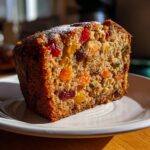
A simple, traditional fruit cake recipe that produces a moist texture, perfect for holiday baking without complex steps.
- Prep Time: 25 min
- Cook Time: 90 min
- Total Time: 115 min
- Yield: 10 servings 1x
- Category: Dessert
- Method: Baking
- Cuisine: American
- Diet: Vegetarian
Ingredients
- 2 cups all-purpose flour
- 1 teaspoon baking powder
- 1/2 teaspoon ground cinnamon
- 1/4 teaspoon ground nutmeg
- 1/4 teaspoon ground allspice
- 1/4 teaspoon salt
- 1 cup (2 sticks) unsalted butter, softened
- 1 cup granulated sugar
- 1/2 cup packed light brown sugar
- 4 large eggs
- 1 teaspoon vanilla extract
- 1/2 cup orange juice
- 1 pound mixed dried fruit (raisins, currants, candied cherries, pineapple)
- 1/2 cup chopped pecans or walnuts
Instructions
- Preheat your oven to 300°F (150°C). Grease and flour a 9-inch loaf pan or a 9-inch round cake pan.
- In a medium bowl, whisk together the flour, baking powder, cinnamon, nutmeg, allspice, and salt. Set aside.
- In a large bowl, beat the softened butter, granulated sugar, and brown sugar with a wooden spoon or electric mixer until light and fluffy.
- Beat in the eggs one at a time, mixing well after each addition. Stir in the vanilla extract and orange juice.
- Gradually add the dry ingredient mixture to the wet ingredients, mixing until just combined. Do not overmix.
- Fold in the mixed dried fruit and chopped nuts until they are evenly distributed throughout the batter.
- Pour the batter into the prepared pan. Smooth the top with a spatula.
- Bake for 1 hour 15 minutes to 1 hour 30 minutes, or until a wooden skewer inserted into the center comes out clean. Baking time varies based on the pan size and oven.
- Let the cake cool in the pan for 15 minutes before inverting it onto a wire rack to cool completely.
- If you plan to age the cake, wrap it tightly in cheesecloth soaked in brandy or rum while it is still warm. Store in an airtight container for at least two weeks before serving.
Notes
- To keep the cake moist without soaking, boil the dried fruit briefly in the orange juice before adding it to the batter.
- You can substitute the mixed dried fruit with your preferred combination of dried apricots, dates, and glace cherries.
- This cake freezes well when wrapped tightly in plastic wrap and foil for up to three months.
Nutrition
- Serving Size: 1 slice
- Calories: 350
- Sugar: 45g
- Sodium: 150mg
- Fat: 15g
- Saturated Fat: 8g
- Unsaturated Fat: 7g
- Trans Fat: 0g
- Carbohydrates: 55g
- Fiber: 2g
- Protein: 4g
- Cholesterol: 65mg