


Oh, that glorious feeling when your pear tree is just *bursting* with fruit, right? It’s such a sweet problem to have! Capturing that fresh, autumnal flavor for later is where these old-fashioned pear preserves come in. They’re wonderfully chunky, bursting with real pear goodness, and honestly, making them is part of the fun. Just like Zoe learned in her family’s kitchen and later in a busy bistro, cooking shouldn’t be scary. We’re breaking down this recipe, using safe water bath canning, so you can confidently fill your pantry with this deliciousness. Sometimes, all it takes is a little kitchen slang to make things easy and delicious!
- Why You'll Love This Old-Fashioned Pear Preserves Recipe
- Ingredients for Chunky Pear Preserves
- Essential Equipment for Canning Pear Preserves
- Step-by-Step Guide to Making Pear Preserves Without Pectin
- Tips for Perfect Pear Preserves Safety and Acidity
- Serving Suggestions for Your Homemade Pear Preserves
- Storage and Reheating Instructions for Pear Preserves
- Frequently Asked Questions About Pear Preserves
- Nutritional Information for Pear Preserves
- Share Your Pear Preserves Creations!
Why You’ll Love This Old-Fashioned Pear Preserves Recipe
Okay, so why should YOU make these pear preserves? Let me count the ways! First off, they taste SO much better than anything store-bought. You get that pure, fresh pear flavor, plus a little kick from the cinnamon and nutmeg. And honestly, it’s easier than you think! We’re skipping the pectin here, letting the natural goodness of the pears shine through, while still getting that perfect chunky texture.
Plus, there’s just something incredibly satisfying about knowing you’ve canned your own fruit. It’s like bottling up sunshine! This recipe is your ticket to a pantry full of deliciousness, perfect for slathering on toast, scones, or fancy cheese boards. Oh, and did I mention they make the most darling, homemade gifts? Trust me, your friends and family will be begging you for a jar!
Ingredients for Chunky Pear Preserves
Alright, let’s talk about what you’ll need to make these glorious pear preserves! It’s pretty straightforward, and you might already have most of it hanging around. We’re talking about:
- 4 cups chopped ripe pears (about 2 lbs) – Make sure they’re ripe but still a little firm so they hold their shape!
- 1/4 cup lemon juice – This is super important for safety and helps things set up nicely since we’re not using pectin.
- 1/2 teaspoon ground cinnamon
- 1/4 teaspoon ground nutmeg – These warm spices are just perfect with pears!
- 4 cups granulated sugar – This might seem like a lot, but it’s key for preserving and getting that beautiful texture.
That’s it! Simple ingredients for a simple, old-fashioned flavor that’s totally worth it.
Essential Equipment for Canning Pear Preserves
Before we dive into making these amazing pear preserves, let’s make sure you’ve got your ducks in a row – or, you know, your jars and tools ready! Having the right setup makes everything so much smoother. You’ll absolutely need a big water bath canner with a rack at the bottom, one that’s tall enough to cover your jars by at least two inches of water. Grab some sturdy canning jars (pint or half-pint size work great for this), new lids, and some bands. Don’t forget a jar lifter – trust me, it’s a lifesaver! A large, heavy-bottomed pot for cooking the preserves is also key, plus a ladle and a non-metallic spatula for filling those jars. Having all this ready means you can just focus on the delicious pear-y goodness!
Step-by-Step Guide to Making Pear Preserves Without Pectin
Alright, let’s get down to business and make some delicious pear preserves! Don’t worry, we’re going to take it one step at a time. Remember how Zoe learned that breaking things down makes them less intimidating? That’s exactly what we’ll do here. Since we’re skipping the pectin, we’ll rely on good old-fashioned cooking and natural fruit sugars to get that lovely, chunky texture.
Preparing Your Canning Station
First things first, let’s get our canning station set up. This is super important for food safety, folks! Get your water bath canner filled with water and set it to a simmer. You want it ready to go. Then, carefully sterilize your jars, lids, and bands according to the manufacturer’s instructions – usually by boiling them in water for at least 10 minutes. I like to keep them hot in the water until I’m ready to fill them. This whole setup ensures that pesky bacteria don’t have a chance to spoil your hard work. It’s like giving your preserves a safe start!
Cooking the Pears and Adding Flavor
Now for the fun part! In a nice big pot (seriously, bigger than you think you need is best, trust me on this!), combine your chopped pears and that all-important lemon juice. We’ll cook this over medium heat, just stirring now and then, until those pear pieces start to soften up a bit. You’ll notice they start to release some of their lovely juices. Once they’re nice and tender, toss in your cinnamon and nutmeg. Oh, the smell that fills the kitchen right about now is just amazing – pure autumn comfort!
Achieving the Perfect Preserve Consistency
This is where the magic really happens, and it’s all about patience! Now, gradually stir in all that granulated sugar until it disappears completely. We want it nice and dissolved. Then comes the part where we bring it to a *rolling* boil. And I mean a ROLLING boil – one that you absolutely cannot stir down. This takes a good amount of time, maybe 20-40 minutes, and you’ll need to stir frequently to keep it from sticking. To know when it’s ready, do the chilled plate test: spoon a little bit onto a plate you’ve kept in the freezer, and if it mounds up and doesn’t run off quickly, you’ve hit that perfect gelling point! It’s that beautiful, slightly thickened consistency we’re after.

Filling and Sealing Your Pear Preserves
Once your preserves have reached that lovely, jammy perfection and you’ve skimmed off any foam, it’s time to fill those jars! Carefully ladle the hot preserves into your sterilized jars. Be sure to leave about a 1/2 inch of headspace at the top – this is crucial for a good seal. I like to use a little non-metallic spatula or a chopstick to gently run around the inside edge of each jar to release any trapped air bubbles. Then, wipe those jar rims super clean with a damp cloth; a clean rim is essential for a good seal. Pop on your prepared lids and screw on the bands until they’re just fingertip tight – not too tight, or the air can’t escape during processing.

Water Bath Canning: Safety First
Now we’re going to get these jars safely preserved using the water bath method. Gently place your filled jars into the simmering water bath canner, making sure they’re upright and not touching each other. Add more hot water if needed so the jars are covered by at least 2 inches of water. Put the lid on your canner and let the water return to a full rolling boil. Once it’s boiling hard, start your timer for processing: 10 minutes. Remember, if you’re at a higher altitude, you’ll likely need to add a few extra minutes to that processing time, so check your local canning guidelines!

Cooling and Checking for Seals
After your 10 minutes (or more, if you’re at altitude!) of processing, carefully lift the jars out of the canner using your jar lifter and place them on a wire rack or a towel-lined counter. Let them sit undisturbed for 12 to 24 hours. You’ll probably hear some satisfying *ping!* sounds as the lids seal – that’s music to my ears! Once they’ve cooled completely, give each lid a little press. If it doesn’t flex up and down, it’s sealed perfectly! If a lid didn’t seal, don’t worry! Just pop it in the fridge and enjoy it soon.

Tips for Perfect Pear Preserves Safety and Acidity
Making sure your pear preserves are not only delicious but also safe to eat is my absolute top priority. It really boils down to a few key things, and honestly, it’s not complicated at all! First off, use pears that are ripe but still feel a little firm to the touch. Mushy pears will just fall apart and you won’t get that lovely chunky texture we’re going for. They need to hold up! Also, when you’re canning, make *sure* every single piece of pear is nice and submerged in that syrupy liquid. If they’re sticking out, they’re way more likely to spoil. It sounds simple, but it’s crucial for safe water bath canning.
And let’s talk about that lemon juice! It’s not just for flavor, though it does add a nice little brightness. Lemon juice is essential because it adds the necessary acidity for water bath canning. Fruits like pears are naturally lower in acid, and adding lemon juice helps create the perfect acidic environment to prevent the growth of yucky stuff like botulism. It’s like a little safety net for your preserves, ensuring they’re shelf-stable and safe to enjoy for months to come. Always use the amount called for in the recipe, and don’t skimp on it!
Serving Suggestions for Your Homemade Pear Preserves
Okay, so you’ve gone through all the steps, your jars are gleaming, and you’ve got this beautiful, chunky pear preserves just waiting to be enjoyed! Now what? Oh, the possibilities are endless! My absolute favorite way is to slather it generously on a warm, flaky biscuit – it’s pure comfort food heaven. But it’s also fantastic warmed up just a tiny bit and served alongside a nice sharp cheddar or creamy brie on a cheese board. Honestly, a drizzle over vanilla ice cream or yogurt is divine, too! It’s also perfect dolloped onto oatmeal or as a filling for thumbprint cookies. It just screams farmhouse kitchen, doesn’t it?
Storage and Reheating Instructions for Pear Preserves
Once your glorious pear preserves are all canned up, proper storage is key to keeping them delicious and safe to eat. For those jars that sealed perfectly, you can store them in a cool, dark place—like your pantry or a cupboard—for up to a year. Seriously, a year! That beautiful flavor will hold up so well. If, for some reason, a jar didn’t seal completely, or if you’ve already opened one and have leftovers, just pop that jar into the refrigerator. It’ll be good to go for about 3-4 weeks. If you find your preserves have gotten a bit thick in the fridge, just give them a quick stir, and maybe a gentle reheat in a small saucepan if you’re looking for that luscious, pourable consistency again.
Frequently Asked Questions About Pear Preserves
Got questions about making your own pear preserves? I totally get it! It’s my mission to make this whole process feel like a breeze, so let’s tackle a few common things I hear.
Can I use less sugar in this pear preserves recipe?
This is a big one! While you *can* reduce the sugar, I’d be cautious. In this old-fashioned pear preserves recipe, sugar does more than just sweeten; it acts as a preservative and helps with that lovely texture and gelling. Reducing it too much might affect how well the preserves set and potentially their shelf-life, especially since we’re not using pectin. For the best, safest results, try to stick to the amount of sugar called for. If you’re looking for an even lower-sugar option, you might explore recipes specifically developed for reduced sugar or using a tested sugar substitute, but this classic version relies on that sugar!
How do I know if my pear preserves have gelled?
That moment of truth! The best way to check if your preserves have reached that perfect gelling point, especially without pectin, is the chilled plate test. Pop a small saucer or plate in your freezer before you start cooking. When you think your preserves might be ready, carefully spoon a little bit onto that cold plate. Let it cool for a moment. If it mounds up and doesn’t immediately run back into a thin liquid, you’ve got it! It should hold its shape a bit. If it’s still really runny, just keep on boiling and test again in a few minutes.
What is the correct canning headspace for jam?
Headspace is super important for a good seal, so for these pear preserves, you want to aim for exactly 1/2 inch of headspace. This is that space from the surface of the preserves all the way up to the rim of the jar. It might not seem like much, but it’s enough room for the contents to expand slightly as they heat up in the canner, and it helps create that strong vacuum seal as the jars cool. Too little headspace can cause food to bubble out during processing, potentially preventing a seal. Too much headspace might lead to a weak seal or food spoilage.
Nutritional Information for Pear Preserves
Alright, let’s talk about what’s in that glorious jar of pear preserves! Keep in mind that these numbers are just estimates, because honestly, nature’s perfect, and our ingredients can vary a bit! Each tablespoon serving, roughly:
- Calories: 50
- Sugar: 13g
- Carbohydrates: 13g
- Fat: 0g
- Protein: 0g
- Sodium: 0mg
It’s mostly just pure fruit and sugar goodness! So enjoy it on your favorite toast or biscuit!
Share Your Pear Preserves Creations!
Alright, now that you’ve hopefully whipped up some of these amazing old-fashioned pear preserves, I’d absolutely LOVE to hear all about it! Did you serve them on fluffy biscuits? Maybe they graced a fancy cheese board? Don’t be shy – leave a comment below with your thoughts, rate the recipe, or even share a photo of your creation with me on social media (tagging @kitchenslang, of course!). Seeing your kitchen adventures inspires me so much!
PrintOld-Fashioned Pear Preserves
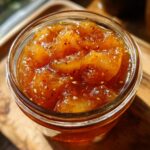
Learn how to make chunky, old-fashioned pear preserves using a water bath canning method. This recipe focuses on clear steps for safe canning, including sterilizing jars and proper headspace, perfect for preserving your seasonal pear harvest.
- Prep Time: 20 min
- Cook Time: 40 min
- Total Time: 60 min
- Yield: Approximately 4 half-pint jars 1x
- Category: Preserves
- Method: Water Bath Canning
- Cuisine: American
- Diet: Vegetarian
Ingredients
- 4 cups chopped ripe pears (about 2 lbs)
- 1/4 cup lemon juice
- 1/2 teaspoon ground cinnamon
- 1/4 teaspoon ground nutmeg
- 4 cups granulated sugar
Instructions
- Prepare your water bath canner by filling it with water and bringing it to a simmer. Sterilize your jars, lids, and bands in boiling water.
- In a large pot, combine the chopped pears and lemon juice. Cook over medium heat, stirring occasionally, until the pears begin to soften, about 10-15 minutes.
- Add the cinnamon and nutmeg to the pot and stir to combine.
- Gradually stir in the sugar until it is completely dissolved.
- Bring the mixture to a rolling boil that cannot be stirred down. Cook, stirring frequently, until the preserves reach the gelling point. This can be tested by dropping a small spoonful onto a chilled plate; it should mound up and not spread quickly. This may take 20-40 minutes.
- Remove the pot from the heat. Skim off any foam that rises to the surface.
- Ladle the hot preserves into the prepared jars, leaving 1/2 inch of headspace. Remove any air bubbles by running a non-metallic spatula around the inside of the jar.
- Wipe the jar rims clean with a damp cloth. Place the lids on the jars and screw on the bands until fingertip tight.
- Process the filled jars in the simmering water bath canner for 10 minutes (adjust for altitude if necessary).
- Remove the jars from the canner and let them cool on a wire rack for 12-24 hours. Check for a proper seal.
Notes
- Using ripe but firm pears will give you the best texture for chunky preserves.
- Ensure your pears are fully submerged in the canning liquid to prevent spoilage.
- For a smoother preserve, you can lightly mash some of the pear pieces before adding the sugar.
- Store sealed jars in a cool, dark place. Unsealed jars should be refrigerated and used within a few weeks.
Nutrition
- Serving Size: 1 tablespoon
- Calories: 50
- Sugar: 13g
- Sodium: 0mg
- Fat: 0g
- Saturated Fat: 0g
- Unsaturated Fat: 0g
- Trans Fat: 0g
- Carbohydrates: 13g
- Fiber: 0g
- Protein: 0g
- Cholesterol: 0mg