
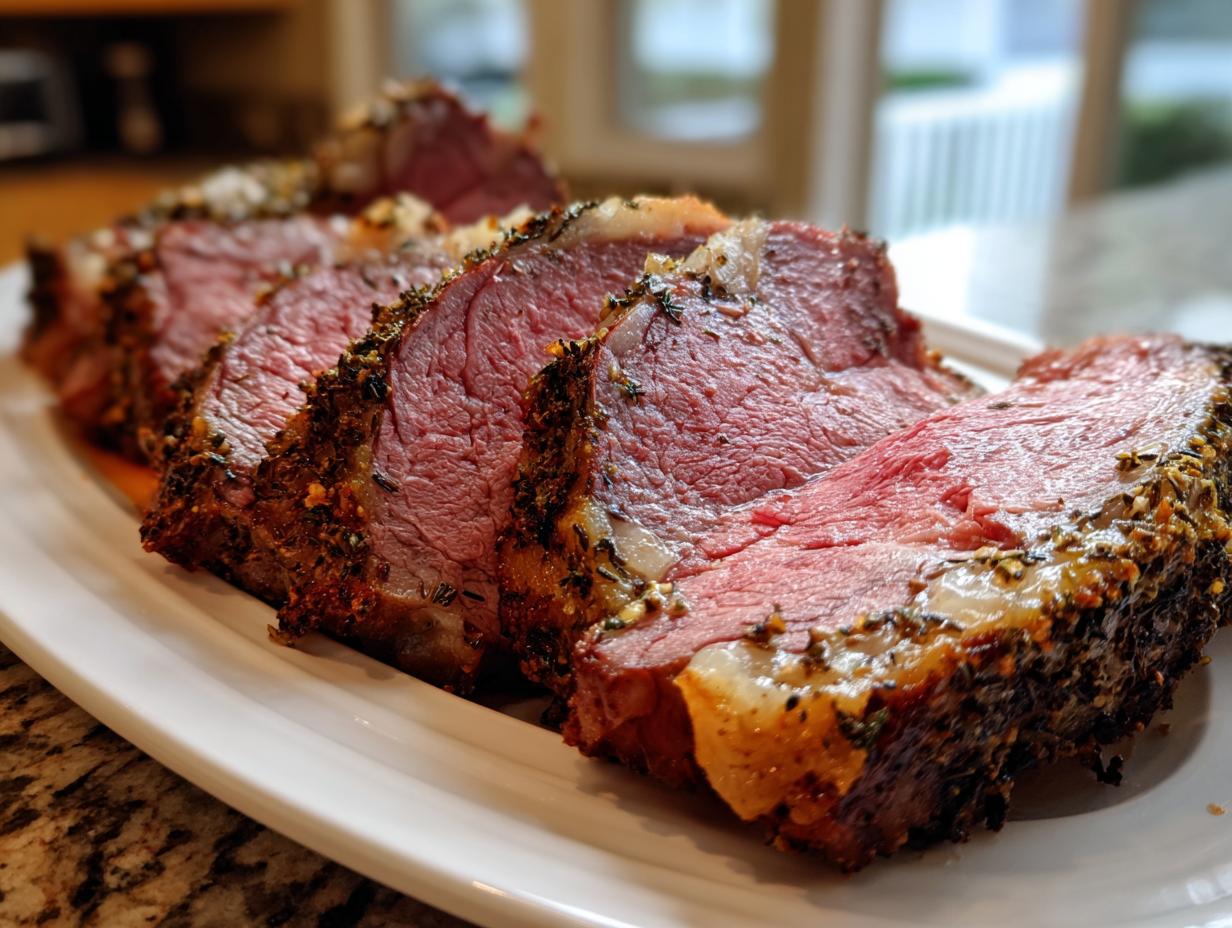
When you need a centerpiece—the kind of dish where the entire table just stops and stares—you need to stop scrolling right now. Forget those sad, grey roasts you see sometimes. We’re talking about the ultimate holiday main course: the standing **rib roast**. I know, it looks intimidating because it’s expensive, right? But listen, I learned kitchen secrets standing on a milk crate in a real bistro kitchen, and I’m here to translate that knowledge for your home oven. This recipe takes that pro-level technique and packages it into one foolproof method that guarantees you a ridiculously juicy interior wrapped in the most savory **herb crusted rib roast** you’ve ever tasted. If you want the full breakdown before we start mixing, check out my deeper dive on the amazing juicy secret to prime rib roast. No more guesswork, just spectacular results.
- Why This Herb Crusted Rib Roast is Your New Holiday Main Course
- Gathering Your Ingredients for the Rib Roast
- Standing Rib Roast Instructions: The Two-Stage Oven Method
- Expert Tips for Your Oven Roasted Rib Roast Success
- What to Serve with Your Herb Crusted Rib Roast
- Storing and Reheating Leftover Rib Roast
- Frequently Asked Questions About How to Cook Prime Rib
- Nutritional Estimate for Your Rib Roast Serving
- Share Your Rib Roast Success
- Nutritional Estimate for Your Rib Roast Serving
- Share Your Rib Roast Success
Why This Herb Crusted Rib Roast is Your New Holiday Main Course
Listen, if you’re going to invest in a cut this magnificent, you need a method that respects the meat. This isn’t just another recipe; it’s your ticket to becoming the undisputed champion of your next big dinner. We’re translating those fancy restaurant secrets directly to your countertop. For the full breakdown on making this shine, you can dive into my post about the prime rib showstopper roast.
- This technique is completely **foolproof**. Seriously, just trust the thermometer, and you can’t mess up this expensive cut!
- It delivers the mouthfeel everyone talks about: unbelievably **tender roast beef** that practically melts.
- It becomes an instant **show stopping dinner idea**, making every guest feel like they are eating at a five-star spot.
Learning the lingo means learning how to control the outcome, and that’s exactly what we’re doing here.
Achieving the Perfect Medium Rare Rib Roast
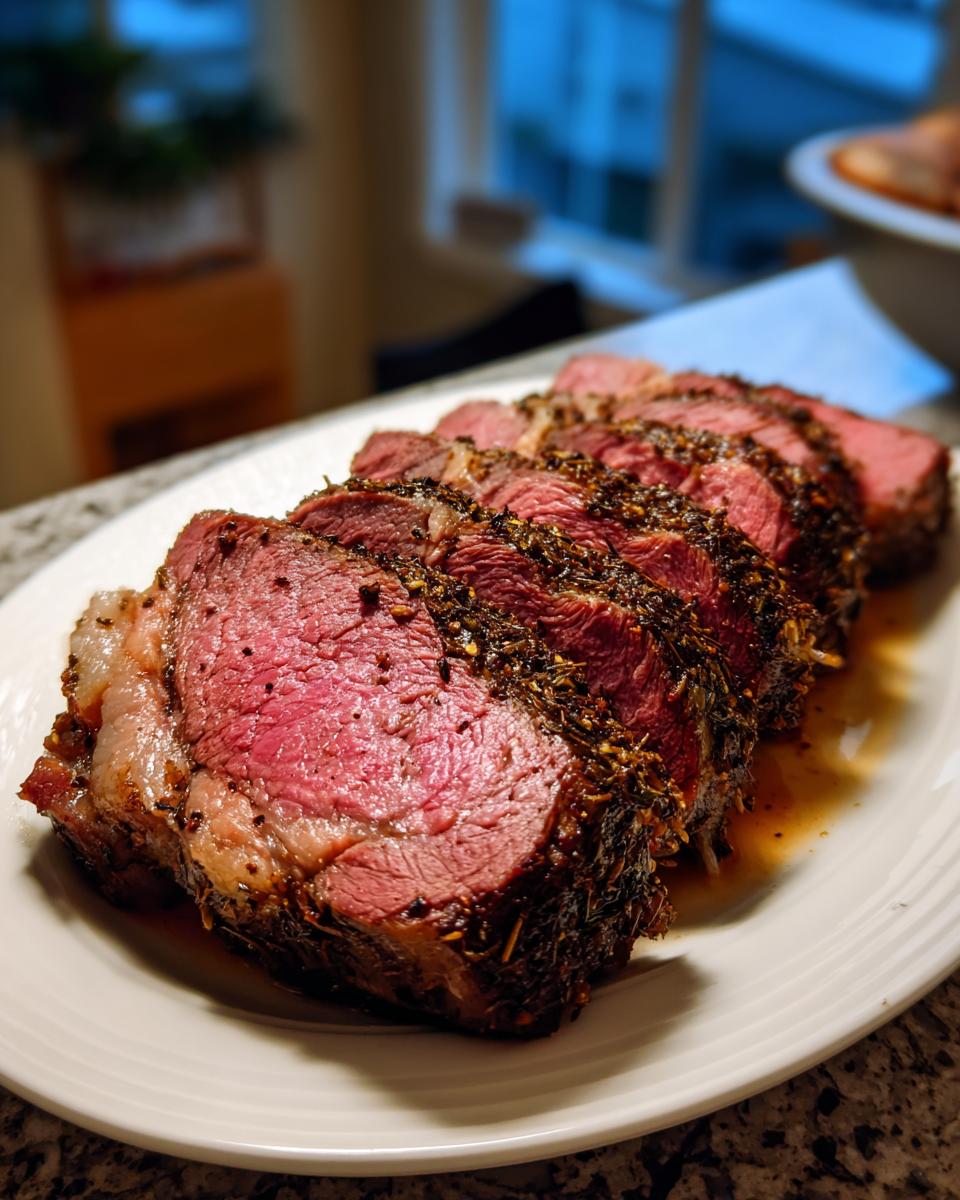
The secret to avoiding that dreaded ‘grey band’ of overcooked meat around the edge is all about temperature management, not just time. We use a two-stage heat approach, but the real magic is pulling it out exactly when the thermometer hits 125°F. That slight carryover cooking while it rests locks in that beautiful, juicy interior. That 125°F reading is your golden key to a **perfect medium rare roast** every single time. Don’t skip the thermometer; it’s the only non-negotiable tool here.
The Flavor Secret: Garlic Herb Roast Rub
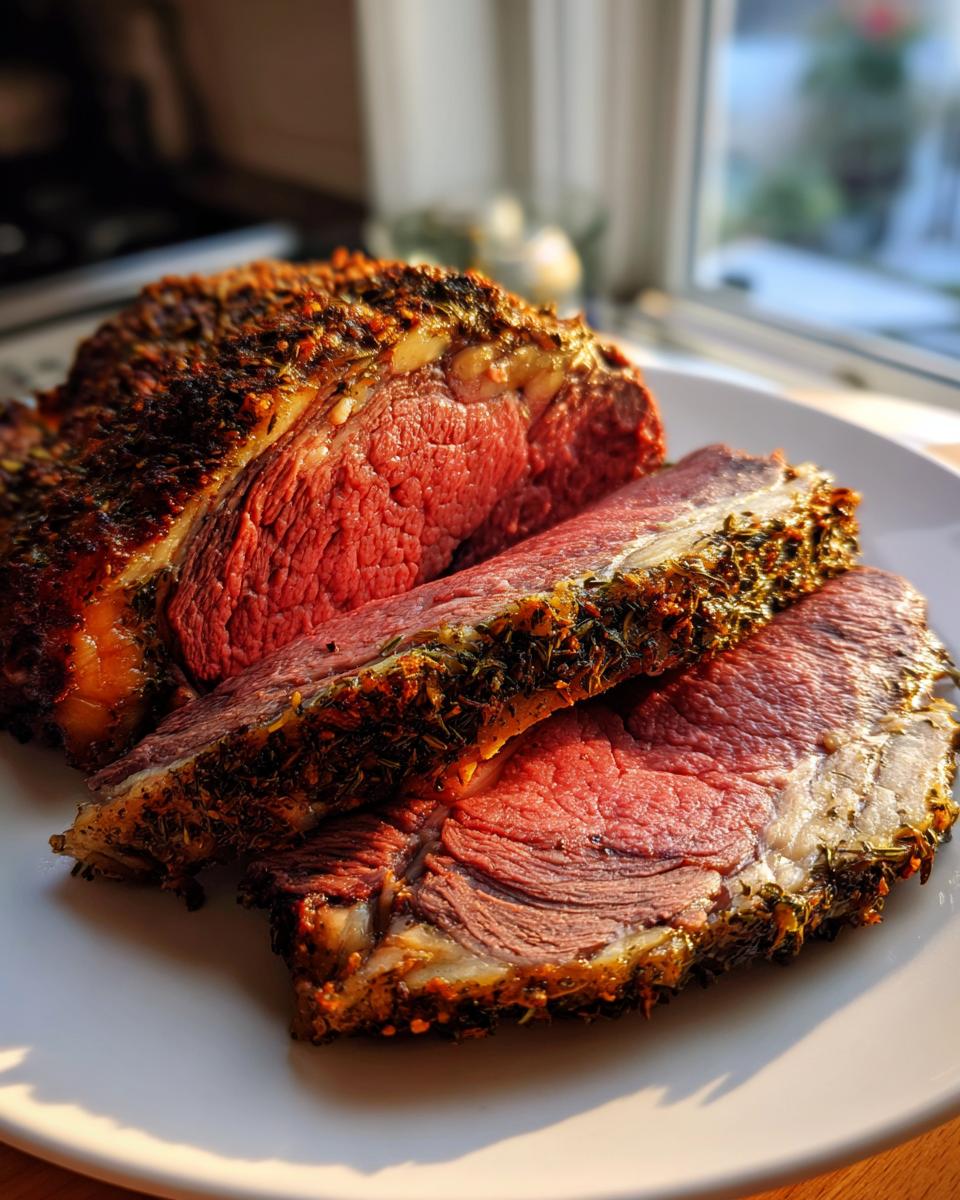
Okay, the texture is amazing, but the flavor? That comes from the paste. We aren’t just sprinkling dry herbs on top; we are creating a thick, aromatic coating that caramelizes against the fat cap during that initial high-heat blast. That robust **garlic herb roast rub** melds into the surface of the **rib roast**, giving you deep, roast-y flavor in every single bite. It’s savory, earthy, and frankly addictive.
Gathering Your Ingredients for the Rib Roast
Alright, let’s talk supplies. Since this is a centerpiece, we have to get the quality right from the jump. If you want the best flavor boost for this beautiful cut, you know I’m obsessed with making a killer horseradish sauce later on, so check out the recipe for that creamy horseradish sauce! For the roast itself, precision matters when mixing the rub. Make sure that butter is *actually* softened—not melted, softened. And yes, the garlic needs to be finely minced; we want flavor penetration, not big chunky bits.
- You need a standard standing rib roast, usually around 4 to 6 pounds for a perfect beginner size.
- For the paste, grab that Dijon mustard, Worcestershire sauce, and make sure your herbs (thyme and rosemary) are the dried variety since we are cooking hot and fast initially.
Having these prepared precisely is half the battle won before the oven even turns on.
Standing Rib Roast Instructions: The Two-Stage Oven Method
Okay, this is where we put all that planning to work. If you’re nervous, just remember the language of the line: high heat first, then low and slow. That combo is the **best rib roast technique** I picked up for maximum crust development and an even internal cook. If you want the full background on why this works so perfectly for an amazing **herb crusted rib roast**, I break down the science behind it in my deep dive at prime rib roast oven foolproof method. Let’s get serious about this centerpiece!
Prepping the Rib Roast and Herb Crust
First things first: forget cooking cold meat! Get that **rib roast** out of the fridge a good two or three hours before you plan to cook it. It needs to lose that chill so it cooks evenly from edge to center. While it’s warming up, whip up that paste we talked about—mix all your softened butter, oil, garlic, Dijon, Worcestershire, and spices until it’s a thick, glorious mess. Don’t forget the professional tip I picked up: if your butcher cut the bones away, ask them to tie them right back onto the roast. This keeps the meat sitting level, which is huge for even cooking, just like they do in the restaurants. You can also see a fantastic, similar approach over at Times of Recipe for their herb-crusted ribeye roast.
The Sear and Slow Roast for a Juicy Roast Beef Centerpiece
Dry that entire roast surface with paper towels—you need dry skin for a great sear. Then, rub that powerful paste all over. Now for the heat shift. Get your oven screaming hot to 450°F and roast it for just 15 minutes. That’s your sear! Next, immediately drop the temp down to 325°F. This is where the patience comes in. Keep checking that internal thermometer! For that buttery, just-pink center, you pull it when the thickest part hits 125°F. That is the magic number for a **perfect medium rare roast** every single time. Don’t get greedy waiting for it to climb even one degree higher!
The Crucial Rest Period for Your Rib Roast
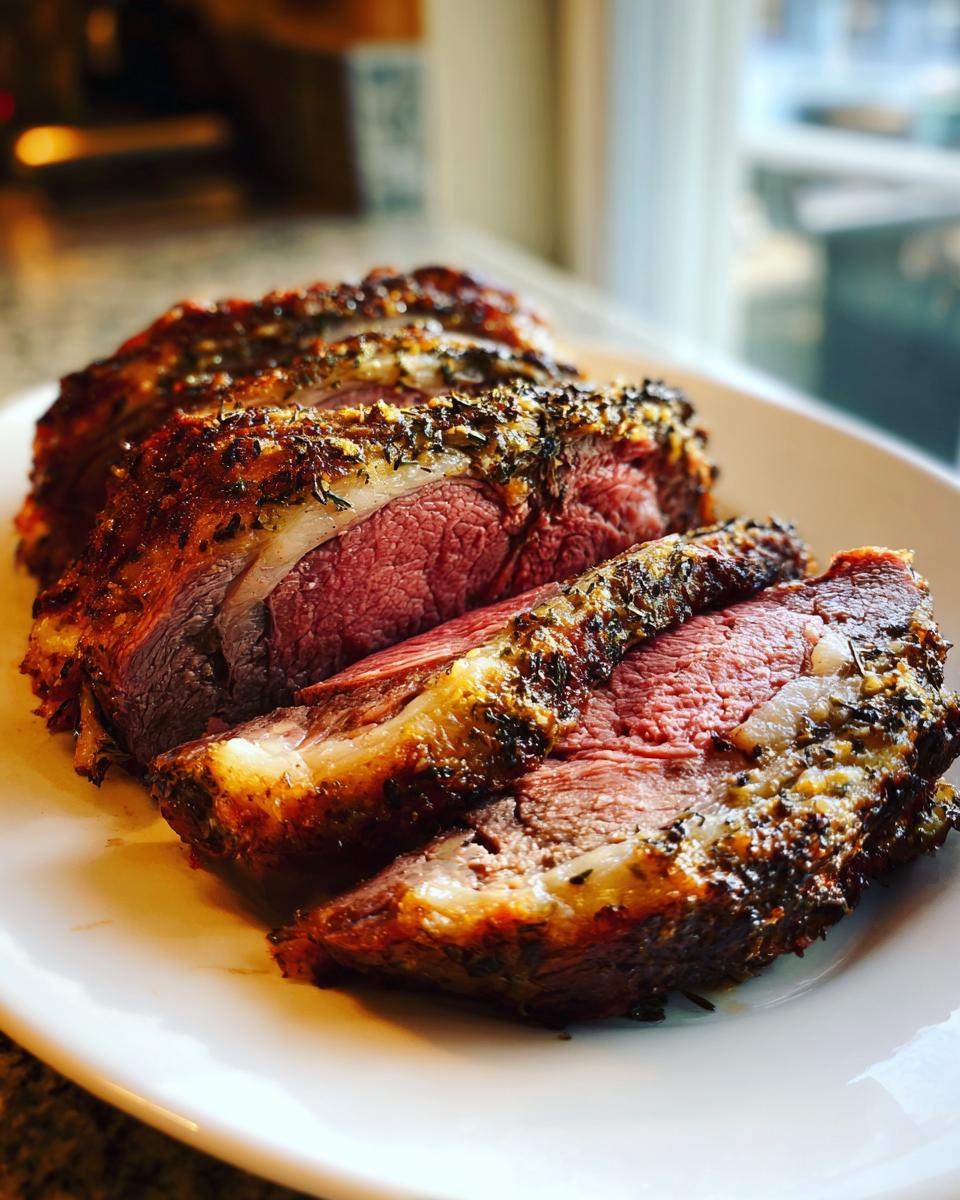
Don’t even think about slicing it the second it comes out of the oven! This is the step most people fail at, and it’s the reason their expensive **rib roast** bleeds out onto the cutting board. Take it out, tent it loosely with foil, and walk away for a minimum of 20 minutes. Trust me, you need that rest. All those wonderful juices that were swimming around the outer edges during the high heat need time to redistribute back into the center of the meat. When you slice after resting, you get that **juicy roast beef centerpiece** instead of a puddle on your platter. This is culinary common sense, learned the hard way!
Expert Tips for Your Oven Roasted Rib Roast Success
If you want to elevate this **oven roasted rib roast** from ‘great’ to ‘legendary’ status—the kind people talk about for years—you need to know these two pro moves. They come straight from the playbook I used to manage massive dinner rushes! You can get more details on achieving that uniform cook by checking out my technique guide for crispy skin, which uses similar principles: roast turkey thanksgiving juicy crispy skin.
First up: the low-and-slow alternative. If you are terrified of the grey band, start ridiculously low—think 250°F—until the roast is about 10 degrees below your target. *Then* you hit it with that 450°F blast for ten minutes just to crisp up that gorgeous herb crust we built. That guarantees edge-to-edge perfection. The folks over at Kitchen Confide also preach a very similar method for flawless results.
My other absolute favorite, especially if you have time the day before, is the dry brine. Seriously—skip the paste entirely one day before cooking, coat that entire **rib roast** heavily just with salt and pepper, and leave it uncovered in the fridge. It dries the exterior out, which guarantees a crunchier crust when it hits the heat later. Remember, when dealing with a quality cut of beef, patience and minimal interference is often the **best rib roast technique** you can deploy!
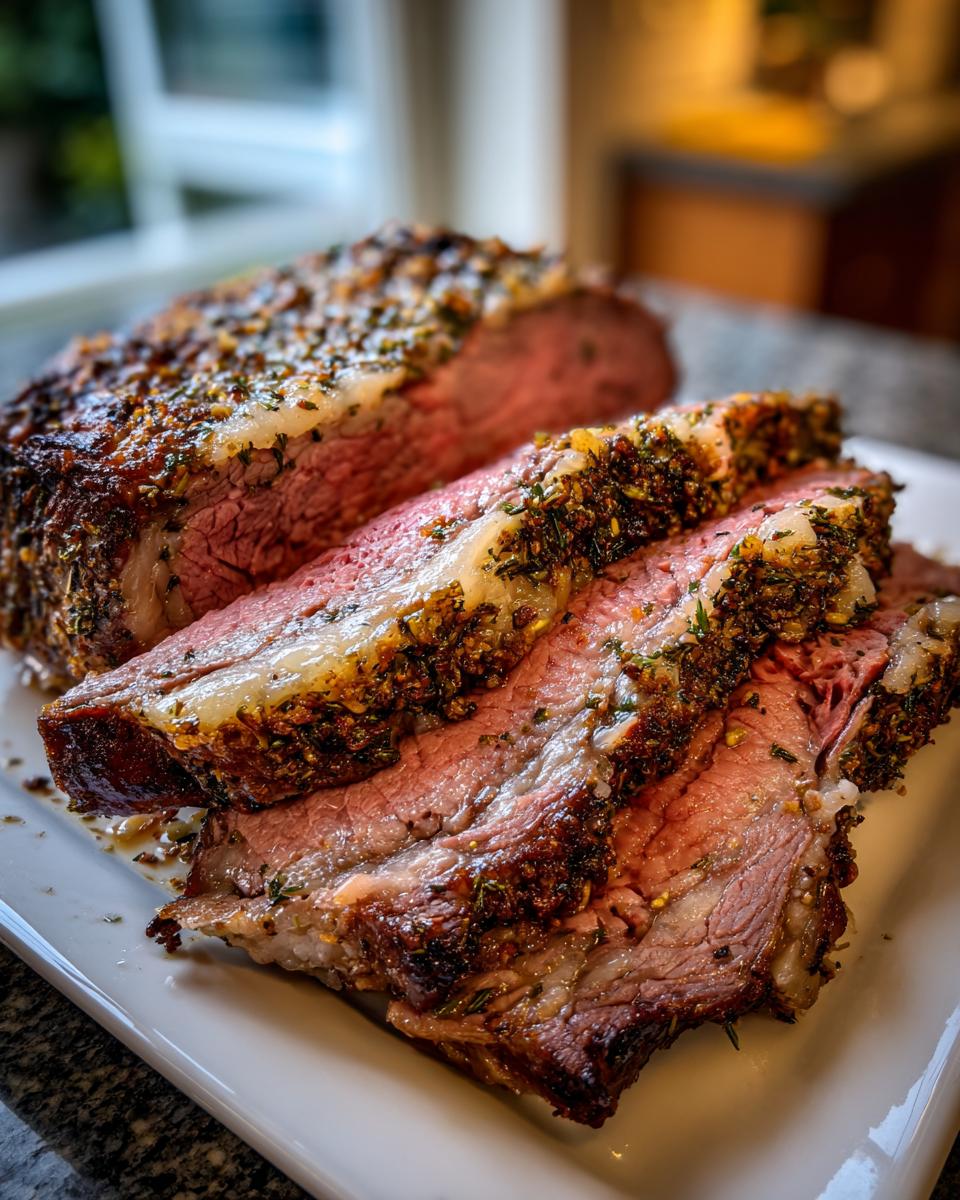
What to Serve with Your Herb Crusted Rib Roast
You’ve mastered the **rib roast**, which means you’ve created the star of the show. Now, you need an entourage worthy of that magnificent beef! This is your grand, **holiday main course**, so we aren’t messing around with sad little side salads, okay? We need things that can stand up to that rich flavor and soak up all those glorious drippings.
First, let’s address the drippings. If you skipped making a simple pan gravy or au jus from the roasting pan—step away from the table! That concentrated flavor is liquid gold. But if you want true starch champions beside your beef, you have to go classic. I’m telling you, you need potatoes that can handle the sauce. You absolutely have to try my recipe for garlic parmesan mashed potatoes—they are creamy enough, sharp enough, and robust enough to handle the beef juices.
And for the ultimate classic pairing? You whip up some fluffy Yorkshire puddings. Seriously, these are practically required when serving a **ribeye roast**! Baking them in beef drippings gives them an incredible lift and flavor. You can find my foolproof recipe for those towering beauties here: yorkshire pudding recipe lofty rise.
Keep your green vegetables slightly vibrant to cut through the richness. Some simple roasted asparagus or maybe some glazed carrots work perfectly. The main goal is balance—a truly decadent **classic beef roast** needs sides that are flavorful but don’t compete for attention. Keep it traditional; people want comfort when they see a roast this grand!
Storing and Reheating Leftover Rib Roast
Look, the great tragedy of any amazing **rib roast** is when you accidentally dry out the leftovers the next day. We can’t have that on my watch! The key here is how you slice and store it—you treat leftovers differently based on how much you have left.
If you have a huge amount remaining, don’t slice it all up! The less surface area exposed to air, the better it keeps. Leave the roast mostly intact, only slicing off what you plan to eat within the first day or two. Wrap the main piece tightly in plastic wrap, then slip it into a freezer-safe bag or container. This protects it from freezer burn if you decide to freeze it for later.
If you’ve already carved down to smaller slices, they need dedicated attention. Always package the slices tightly together, pressing out as much air as you can manage. A big sealed bag is better than several small containers if the slices are thin. These thin slices will last about 3 to 4 days in the fridge, max.
The Reheating Translation: Keep It Moist
Here’s the line cook secret for reheating cooked beef: never just toss it in the microwave dry. It turns into shoe leather instantly. Instead, we add moisture back in. If you have slices, put them in an oven-safe dish, pour in just a tiny bit of liquid—beef broth is best, but water works in a pinch—and cover that dish tightly with foil. You’re basically poaching it gently in the oven or microwave until it’s just heated through. Low and slow is the mantra for leftovers.
If you only want one or two slices, do it on the stovetop. Warm a thin pat of butter in a skillet over low heat, lay the beef slices in one thin layer, and flip them quickly—seriously, 30 seconds per side—just enough to warm the interior through without cooking it further. That tiny bit of steam trapped by the low heat and fat keeps your leftover **rib roast** feeling almost as tender as the first time around!
Frequently Asked Questions About How to Cook Prime Rib
Look, when you drop that kind of money on a **rib roast**, you deserve textbook answers. I’ve seen every question out there pop up, so let’s just knock these off the list. If you want more pro-level troubleshooting, I talk about handling expensive cuts like this all the time in my guide on the steakhouse secret for cooking filet mignon.
Can I cook a Rib Roast without the bones?
Sure, you can! A boneless **rib roast**, often sold as a **ribeye roast**, cooks a little faster because there’s no bone acting as an insulator beneath the meat. The bone helps slow down the heat transfer right near the bottom, which assists in getting that even cook. When you go boneless, you lose that protection, so you might need to adjust your time downward slightly. Also, presentation-wise, there’s nothing quite like a standing rib roast with the bones attached for a major holiday meal!
What is the difference between a Rib Roast and a Ribeye Roast?
This is just kitchen slang getting confusing, really. They are often the exact same piece of meat, which is the primal section of the cow that sits above the ribeye steak. A standing **rib roast** is usually sold *with* the bones attached, but if you ask a butcher for a **ribeye roast**, you’re often getting the same muscle, just de-boned or tied so the bones are loose. Check if it’s sold by weight—that usually tells you if the bones are meant to be part of the package. For this **classic beef roast**, bone-in is usually best for flavor and stability!
How do I avoid the grey band when cooking my rib roast?
The grey band is caused by overcooking the outer layer while waiting for the center to catch up. We hit this hard in the main steps! First, you must temper the meat—let it come to room temperature for at least two hours. Cold meat hits a hot oven and instantly overcooks the outside. Second, use the two-stage temperature method: high sear, followed by a moderate roast. Most importantly, pull it out when the thermometer reads 125°F for that **perfect medium rare roast**. That rest period lets the center finish cooking without pushing that exterior layer into grey territory. You can read more about perfecting oven temperature guides over at A Fork Tale’s guide on cooking a standing rib roast.
Nutritional Estimate for Your Rib Roast Serving
Since this is a rich meat, I always like to give people a ballpark idea of what they are eating when they indulge in this centerpiece. That beautiful, herby crust and the pure beef are the stars here. Remember, these numbers are rough estimates based on the ingredients in the recipe, and where you source your meat definitely changes things, but it gives you a good starting point for planning your meal!
- Serving Size (6 oz cooked meat): Calories around 450
- Protein (High Energy!): About 42g
- Fat: Around 30g (remember some of this is healthy fat rendered out!)
- Sugar and Carbohydrates: Virtually zero, which is a huge bonus for a rich meal like this.
It’s a decadent protein-heavy dish, which is exactly what you want in a spectacular roast for your **holiday main course**.
Share Your Rib Roast Success
Now you have the lingo and the technique to conquer any **rib roast** recipe out there! I want to see your masterpieces. Did you nail that medium-rare center? Did everyone ask for your secret to that incredible **garlic herb roast rub**? Head over to my contact page below—I love seeing your results! If you’ve tried this recipe, please leave a rating and let me know in the comments how this classic turned out for your **Christmas roast ideas**!
Happy roasting, and don’t forget to reach out via my contact page if you have questions!
Nutritional Estimate for Your Rib Roast Serving
Since this is a rich meat, I always like to give people a ballpark idea of what they are eating when they indulge in this centerpiece. That beautiful, herby crust and the pure beef are the stars here. Remember, these numbers are rough estimates based on the ingredients in the recipe, and where you source your meat definitely changes things, but it gives you a good starting point for planning your meal!
- Serving Size (6 oz cooked meat): Calories around 450
- Protein (High Energy!): About 42g
- Fat: Around 30g (remember some of this is healthy fat rendered out!)
- Sugar and Carbohydrates: Virtually zero, which is a huge bonus for a rich meal like this.
It’s a decadent protein-heavy dish, which is exactly what you want in a spectacular roast for your **holiday main course**.
Share Your Rib Roast Success
So there you have it—the entire insider’s guide to transforming an expensive hunk of beef into a legendary **rib roast**. We broke down the temperature science, built that incredible flavor crust, and honored the critical resting time. That **classic beef roast** is yours now, and believe me, when you pull that out of the oven, the entire room notices!
I’m genuinely so proud of you for tackling this **show stopping dinner idea**. Now comes the fun part: bragging rights! When you serve this for your **Christmas roast ideas**, I need to know how it went. Did your family finally stop ordering steakhouse prime rib and start demanding yours?
Seriously, don’t be shy! Go down to the comments section below and leave a rating. Tell me exactly what you loved—was it the texture, or was it the look of that **herb crusted rib roast**? If you have any last-minute jitters or success stories, drop them in the comments or feel free to shoot me a note through my contact page. Let’s keep celebrating real food made with confidence. Happy carving!
PrintFoolproof Prime Rib Roast with Garlic Herb Crust
This recipe translates professional technique into a simple method for cooking a standing rib roast. You will achieve a juicy, tender roast with a flavorful herb crust, perfect as a show-stopping dinner idea for any special occasion.
- Prep Time: 20 min
- Cook Time: 1 hr 45 min
- Total Time: 2 hr 5 min
- Yield: 6 servings 1x
- Category: Main Course
- Method: Oven Roasting
- Cuisine: American
- Diet: Low Fat
Ingredients
- 1 (4 to 6 pound) standing rib roast (prime rib roast), 2 to 3 ribs
- 3 tablespoons kosher salt
- 1 tablespoon freshly ground black pepper
- 1 tablespoon dried thyme
- 1 tablespoon dried rosemary
- 6 cloves garlic, minced
- 1/4 cup olive oil
- 1/4 cup unsalted butter, softened
- 1 tablespoon Dijon mustard
- 1 teaspoon Worcestershire sauce
Instructions
- Remove the roast from the refrigerator 2 to 3 hours before cooking. Let it come closer to room temperature; this helps the roast cook evenly.
- Prepare the herb crust: In a small bowl, combine the minced garlic, olive oil, softened butter, Dijon mustard, Worcestershire sauce, salt, pepper, thyme, and rosemary. Mix until you have a thick paste.
- Pat the entire surface of the rib roast dry with paper towels. This step is key for a good crust.
- Rub the garlic herb paste evenly over the entire surface of the roast.
- If your roast has bones, ask your butcher to separate them and tie them back onto the roast with kitchen twine. This allows the roast to sit level and cook uniformly.
- Preheat your oven to 450 degrees Fahrenheit. Place the roast, fat-side up, on a rack in a sturdy roasting pan.
- Roast at 450°F for 15 minutes. This initial high heat helps sear the outside.
- Reduce the oven temperature to 325 degrees Fahrenheit. Continue roasting until the internal temperature reaches your desired doneness. Use a meat thermometer inserted into the thickest part of the meat, avoiding bone.
- For medium-rare (the target for a perfect prime rib roast), remove the roast when the thermometer reads 125°F.
- Remove the roast from the oven. Tent it loosely with foil and let it rest for at least 20 minutes before carving. The internal temperature will rise about 5 to 10 degrees during this rest period.
- Remove the twine and slice between the bones to serve. Use the pan drippings to make a simple pan gravy.
Notes
- For edge-to-edge uniform doneness, consider using a low-and-slow method, starting at a lower temperature (like 250°F) until the internal temperature is about 10 degrees below your target, then finishing at 450°F for 10 minutes to crisp the crust.
- Always use a reliable meat thermometer; guessing the internal temperature is the fastest way to ruin an expensive cut like this ribeye roast.
- If you prefer a dry brine, skip the butter rub and coat the roast heavily with salt and pepper 24 hours ahead of time, leaving it uncovered in the refrigerator. Apply the garlic herb mixture just before the initial high-heat sear.
Nutrition
- Serving Size: 6 oz cooked meat
- Calories: 450
- Sugar: 0
- Sodium: 450
- Fat: 30
- Saturated Fat: 12
- Unsaturated Fat: 18
- Trans Fat: 0
- Carbohydrates: 1
- Fiber: 0
- Protein: 42
- Cholesterol: 140