

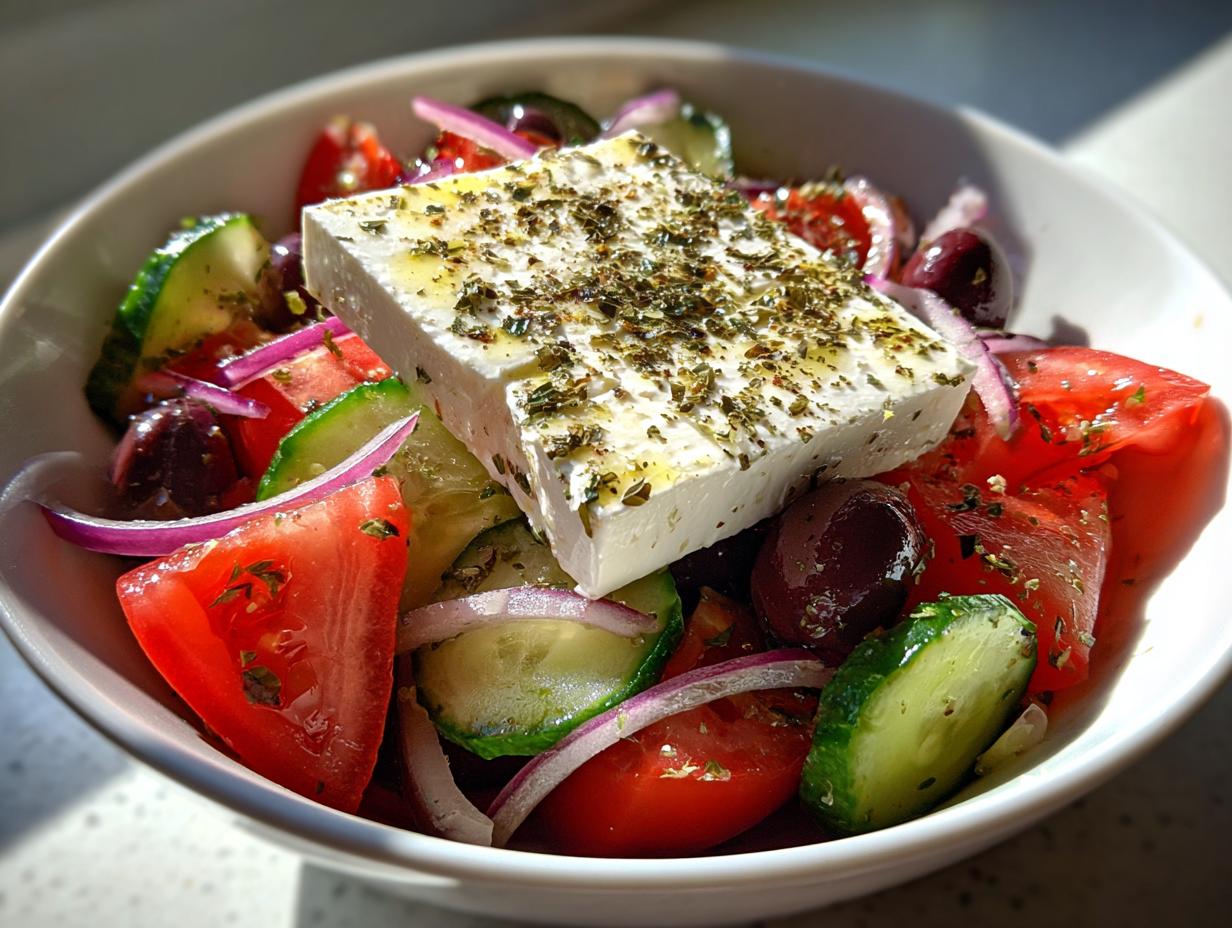
We talk a lot at Kitchen Slang about letting go of the intimidation factor in the kitchen, right? Well, nowhere does that philosophy shine brighter than in a truly authentic greek salad. Forget those sad bowls of iceberg trying to look Mediterranean. This recipe skips all that noise. What we’re making today is the Horiatiki—the real village salad—and honestly, it takes about fifteen minutes, tops. It’s about instinctual layering, letting the quality ingredients speak for themselves. You don’t need chef training to nail this; you just need good olive oil and the confidence to keep it simple.
- Why This Authentic Greek Salad Recipe Works (Kitchen Slang Translation)
- Ingredients for Your Horiatiki Greek Salad
- Mastering the Best Greek Salad Dressing: Simple Greek Vinaigrette
- How to Assemble the Traditional Greek Salad (Horiatiki Salad)
- Tips for the Perfect Feta Cheese Salad Experience
- Serving Suggestions for Your Greek Salad
- Storing Leftovers of This Refreshing Cold Salad
- Frequently Asked Questions About the Greek Salad
- Your Next Kitchen Slang Translation
- Your Next Kitchen Slang Translation
Why This Authentic Greek Salad Recipe Works (Kitchen Slang Translation)
Look, every recipe on this site is about getting the biggest flavor payoff for the least amount of fuss. That’s the kitchen slang translation for high quality. So why is this Authentic Greek Salad Recipe my go-to? Because it respects the ingredient list. I’m talking about deep-red, flavorful tomatoes and those gorgeous, briny Kalamata olives.
Big difference number one is what we leave out: lettuce. The Horiatiki style—the true Greek salad—is built on hearty vegetables that can stand up to a good soaking in the dressing. If you include lettuce, the dressing just wilts it instantly. Here, the vegetables soak up the dressing and release their own juices, creating this incredible, flavorful puddle at the bottom of the bowl. That’s where the Vibrant Mediterranean Flavors truly live.
If you’re skeptical, check out some of the great takes out there, like the one at Best Greek Salad Recipe—but promise me you’ll stick to no lettuce. Trust me on this; it makes the whole experience better.
Ingredients for Your Horiatiki Greek Salad
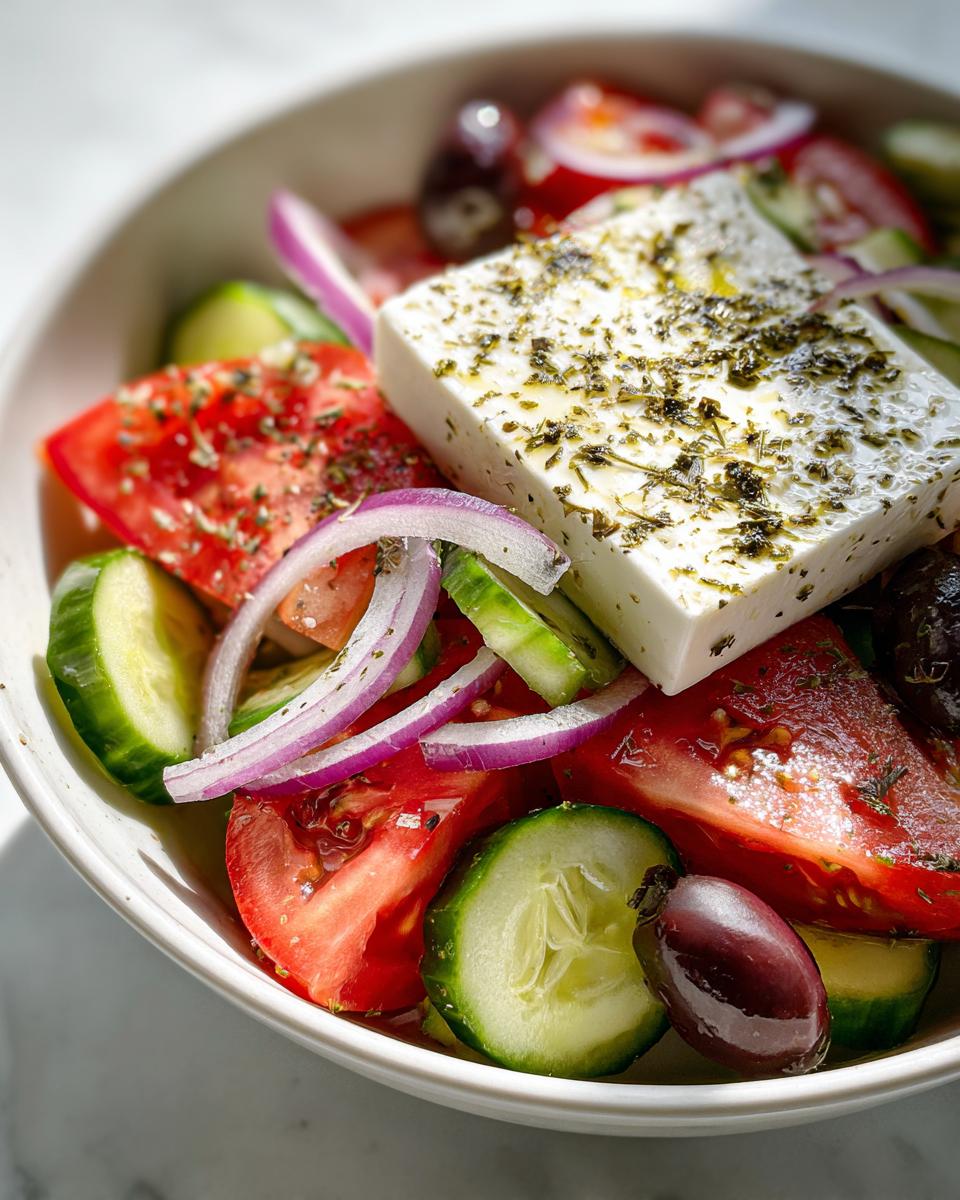
This is where we talk real ingredients, not fillers. For a powerhouse Mediterranean salad, quality matters, especially with two main components: the olive oil and the feta. Don’t skimp on the olive oil; we use a lot of it here, and it needs to taste bright and peppery, not weak. When we talk about feta, we mean the good stuff—the block packed in salty brine. That’s your flavor secret weapon.
Get your cutting board ready. We aren’t making dainty salads here; we want substantial chunks of vegetable. Here’s the lineup for about four generous servings:
- 3 large ripe tomatoes, cut into wedges
- 1 large English cucumber, peeled and sliced into thick half-moons
- 1/2 red onion, thinly sliced
- 1 cup Kalamata olives, whole or pitted
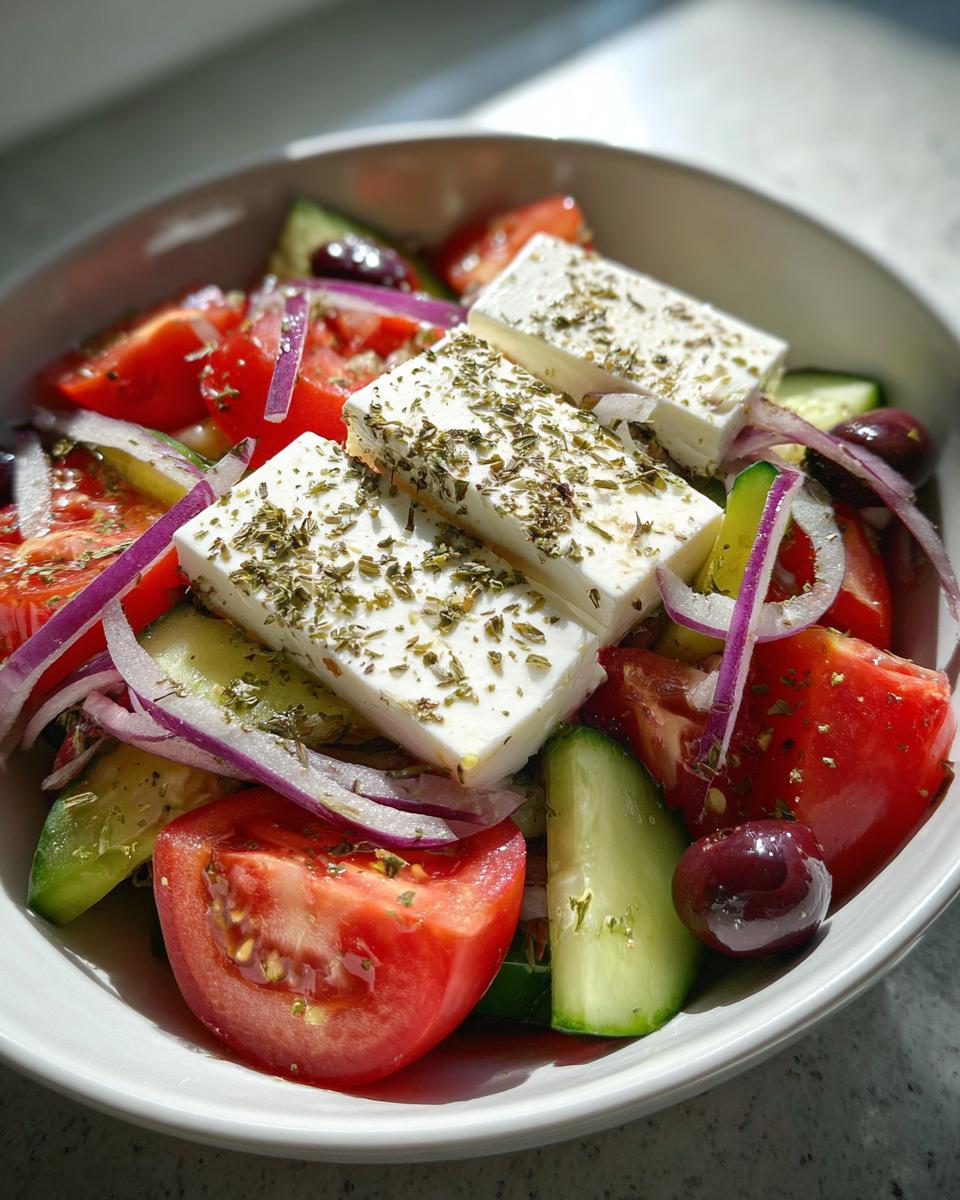
- 8 ounces good quality feta cheese, cut into thick slabs (do not crumble)
- 1/4 cup extra virgin olive oil
- 2 tablespoons red wine vinegar
- 1 teaspoon dried oregano
- Freshly ground black pepper, to taste
Ingredient Notes and Substitutions for your Greek Salad
Okay, a few non-negotiable rules for true Horiatiki flavor. First, that feta cheese absolutely has to be a block that’s been sitting in brine. It’s creamier and saltier. If you use that dry, pre-crumbled stuff, you’re missing the whole textural experience. You want actual slabs sitting on top of the veggies.
Second, if you want to bulk this up a bit without adding starch, toss in one green bell pepper, seeded and sliced thinly along with the onion. It adds a fantastic little crisp crunch that plays perfectly off the juicy tomatoes. Everything here is meant to taste fresh and bold!
Mastering the Best Greek Salad Dressing: Simple Greek Vinaigrette
If there’s one place rookies make things complicated, it’s the dressing. For this authentic salad, we’re making a Simple Greek Vinaigrette that takes maybe two minutes. Seriously, dump the bottle dressings. They don’t have the punch you need to cut through the richness of the feta and the sweetness of the fresh tomatoes. That vibrant flavor profile we talked about? It comes almost entirely from high-quality olive oil and strong red wine vinegar.
Here’s the trick: you whisk the oil and vinegar together until they emulsify just a little bit—don’t spend forever on it, just mix it good. You only season here with fresh black pepper. Yes, pepper! Don’t grab the salt yet. You’ll see why in the assembly steps, but trust me, you want to taste before you salt, because the olives and feta bring enough salinity for the whole dish. If you want to see another amazing Greek flavor translation from our kitchen, check out how we handle our Tzatziki Sauce.
The final touch? Oregano. It goes on *after* the dressing, sprinkled over the top layer, so you get that aromatic hit right before you eat. It’s genius in its simplicity, which is why so many people look up variations like this one, but we stick to tradition here!
How to Assemble the Traditional Greek Salad (Horiatiki Salad)
Alright, we have our beautiful, rugged vegetables and our zesty dressing ready to go. Now for the assembly—this isn’t just dumping stuff in a bowl; it’s architecture! We want layers that protect the crispness while allowing the flavors to mingle just right.
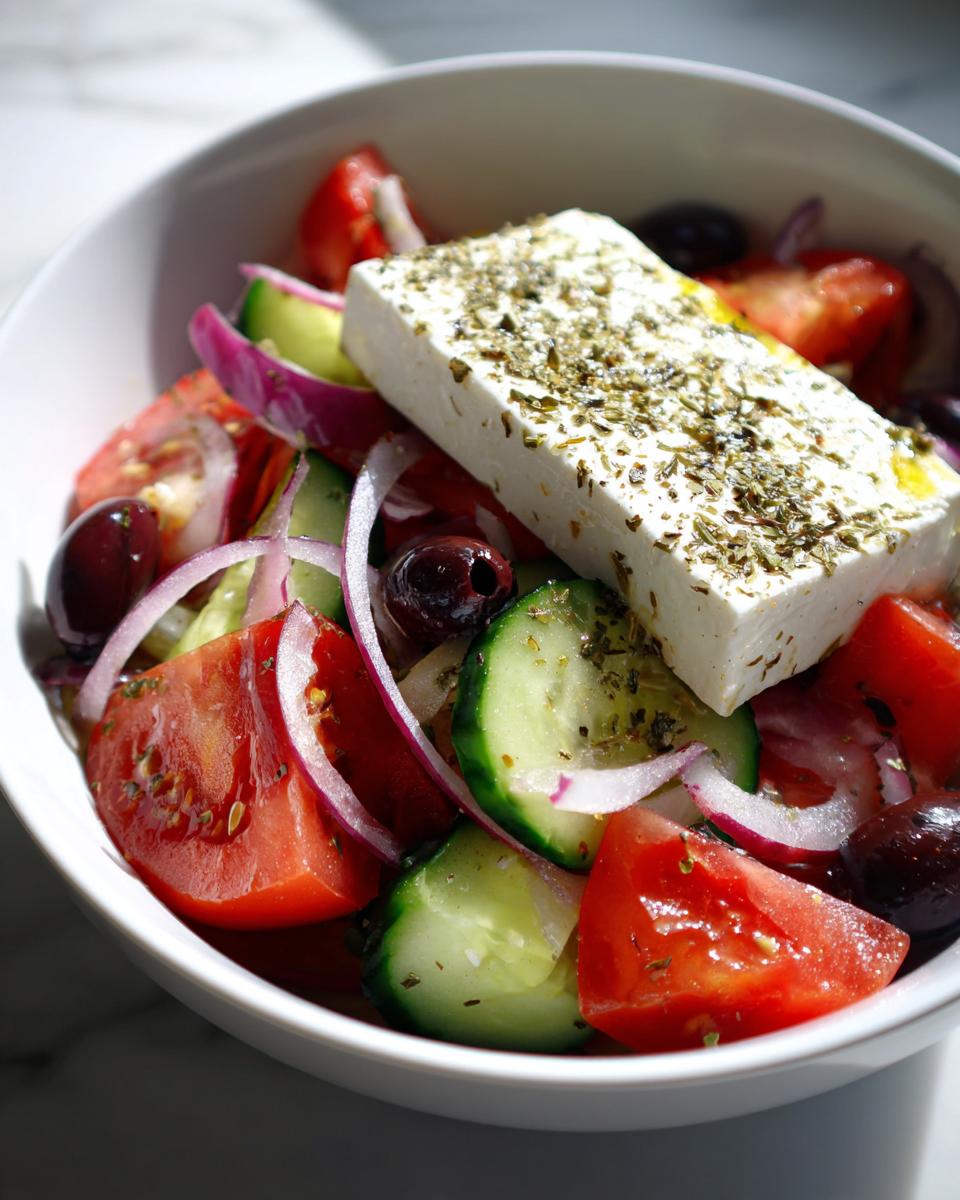
First, take that large, shallow bowl. Lay down all your prepared vegetables—the tomato wedges, the cucumber half-moons, the thinly sliced red onion, and those lovely Kalamata olives. Spread them out evenly. These guys are the foundation of your salad.
Next, here is the part that makes people nervous, but don’t be! Take those thick slabs of feta cheese and lay them right on top of that vegetable bed. Don’t break them up! We are treating the feta like a crowning jewel here, not mixing it in yet. Then, pour that homemade vinaigrette evenly over everything. Let it cascade down over the vegetables and the cheese block. Finally, take your dried oregano and sprinkle it liberally over the whole scene. Only now, right before you bring it to the table, give it a very gentle toss. I mean *gentle*. You want the dressing to coat everything, but you want those big pieces of feta to stay mostly intact so people can cut off a creamy bite with their veggies.
Timing is Everything for a Quick Summer Salad
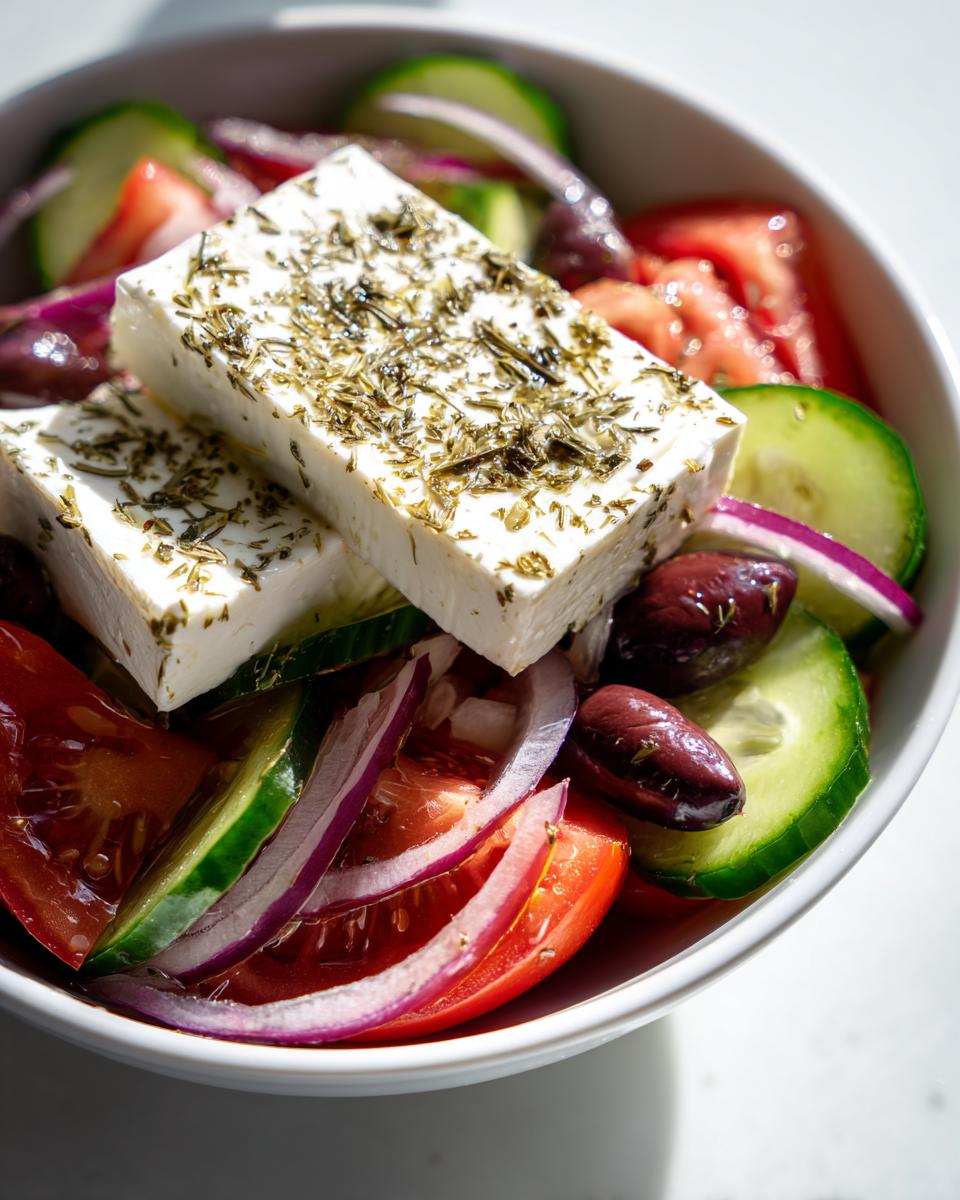
Remember how I promised you this was a fast salad? It’s because there’s zero cooking, obviously. But timing is key for flavor, too. This entire assembly—from cutting the tomatoes to that gentle toss—should take you under five minutes once the chopping is done. That’s why this is my absolute favorite Quick Summer Salad. You need to wait until the last possible second to dress it, though. The minute that vinegar hits those cucumbers and tomatoes, they start releasing water. If you dress it an hour early, you end up with delicious, but soupy, salad juices. We want crunchy vegetables with a flavorful dressing layer, not salad stew. Seriously, dress it and serve immediately for that perfect snap.
Tips for the Perfect Feta Cheese Salad Experience
Okay, let’s talk refinements because that’s what takes a good salad and makes it a showstopper. This isn’t just about assembling good produce; it’s about understanding the salty nature of the game. My biggest pro-tip for your Feta Cheese Salad involves salt management. You seasoned your dressing with pepper only, remember? That was intentional. Feta cheese, especially the quality block-style we insist on, is packed in salty brine. It is intensely seasoned already.
Always taste a piece of your feta and a few olives before you even *think* about adding extra salt to the bowl. Usually, the dressing juices that pool at the bottom are perfectly seasoned once they mix with the cheese runoff. We want that salty explosion, but we don’t want to overpower the fresh vegetables. And another thing—seriously, ditch the crumbles. Cutting the feta into thick, rustic slabs right before serving ensures you get that creamy, solid bite that holds up beautifully against the acid of the vinegar. It’s the difference between a decent side dish and a truly authentic experience. If you love feta this much, you absolutely have to check out my recipe for Whipped Feta Dip next!
When you’re looking for authentic inspiration after mastering this, check out how they build flavor over at Authentic Greek Salad (Easy Horiatiki Recipe). It confirms what we already know: great food is about trusting the process.
Serving Suggestions for Your Greek Salad
So, you’ve got this perfect, vibrant bowl of Horiatiki. Now, where does it go? This Greek Salad is incredibly versatile, which is why it’s one of my favorite go-to recipes for almost any occasion. It’s fantastic as a standout among your Healthy Side Dish Ideas because it’s so fresh and requires zero oven time.
It’s wonderful alongside something grilled. Think simple lemon-herb chicken skewers or maybe some crispy baked falafel. If you’re serving this for a family dinner, it cuts through richer main courses beautifully. For a light lunch, I sometimes just eat a big bowl of it alongside a slice of crusty bread to soak up all those juices—yes, I am that person!
And for potlucks? It travels well if you keep the dressing separate, but honestly, the leftovers—like the way an amazing lasagna tastes better the next day—are still pretty impressive. If you’re looking for a starch to pair it with, you absolutely have to try my Mediterranean Lemon Rice recipe. It’s the perfect partner.
If you want to see how others serve up their fresh salads, check out the ideas over at Greek Salad – Easy Side Dishes for Family Dinner!
Storing Leftovers of This Refreshing Cold Salad
Here’s the cold, hard truth about truly fresh, vibrant salads: they are best eaten right when they are dressed. This Horiatiki is a beautiful Refreshing Cold Salad, but the vinegar and the salt are aggressive tenderizers.
If you *must* store anything, keep the component parts separate—veggies in one airtight container, feta in another. Only dress what you plan to eat in that sitting. If you dress the entire bowl, those gorgeous tomato wedges will have completely softened by the next day. You’ll end up with tasty, tomato-flavored brine, but you lose that crucial crispness. It’s still edible, but we’re aiming for perfection here, right?
Frequently Asked Questions About the Greek Salad
I get asked about this salad constantly! People always have questions about how to keep it authentic or how to adjust it for different dietary needs. It’s straightforward, but knowing the ‘why’ behind the traditional method really changes the game. Here are the things folks ask me most often when they are ready to make their first perfect greek salad.
Is this Authentic Greek Salad Recipe truly low-carb?
Yes, absolutely! That’s one of the huge selling points for this Authentic Greek Salad Recipe. Since we are sticking strictly to vegetables, creamy feta, good fats from the olive oil, and zero grains or sugary starches, it fits perfectly into low-carb or even Keto eating plans. It’s high in healthy fats and flavor, making it a really satisfying side dish that won’t spike your blood sugar. You get all the vibrant flavor without any of the filler!
Can I make this Greek Salad ahead of time?
This is the big one! As I keep repeating, the magic is in the freshness. I really advise against making the entire thing ahead of time. If you want to get a jump start on your Quick Summer Salad prep, here’s my workaround: chop all your vegetables—the tomatoes, cucumbers, and onions—and store them in one airtight container in the fridge. Keep your feta in its brine, and keep the dressing separate. Right before you plan to eat or serve it, assemble everything, pour the dressing on, and toss gently. That way, you save time but keep the crunch factor maxed out, which is crucial for a great salad experience.
What makes this a Horiatiki Salad instead of just a regular Greek Salad?
This is where we talk tradition! If you see a bowl of mixed greens, maybe some shredded carrots or pasta, that’s usually what people call a “restaurant-style” Greek Salad. The true, traditional Horiatiki Salad—the word means “village salad”—is defined by what it *doesn’t* have. It has no lettuce, no pasta, and often no cooked ingredients at all. It’s simply big, rustic cuts of tomato, cucumber, onion, olives, and a huge slab of feta on top. It’s meant to be hearty and rustic. If you’re looking for simple, no-fuss recipes that keep the integrity of the dish, I love the straightforward approach over at Best Greek Salad Recipe.
If you want more inspiration for amazing, quick, vegetable-focused cooking, check out my Mediterranean Chickpea Salad next!
Your Next Kitchen Slang Translation
And there you have it! A truly authentic, flavorful, and lightning-fast greek salad that tastes like you spent hours over a hot stove, when really, you just spent about fifteen minutes chopping. That’s the power of knowing the right lingo, right? Tell me how it went! Give this recipe a high rating if you loved the vibrant flavor and no-lettuce structure. Seriously, drop your notes in the comments below!
If you’re ready to tackle your next simple winner, head on over and check out my Easy Chili Recipe for a Weeknight Dinner. See you in the kitchen!
Your Next Kitchen Slang Translation
And there you have it! A truly authentic, flavorful, and lightning-fast greek salad that tastes like you spent hours over a hot stove, when really, you just spent about fifteen minutes chopping. That’s the power of knowing the right lingo, right? Tell me how it went! Give this recipe a high rating if you loved the vibrant flavor and no-lettuce structure. Seriously, drop your notes in the comments below!
If you’re ready to tackle your next simple winner, head on over and check out my Easy Chili Recipe for a Weeknight Dinner. See you in the kitchen!
PrintAuthentic Greek Salad (Horiatiki) – The No-Lettuce Classic
Make the traditional Horiatiki salad with fresh vegetables, creamy feta, and a zesty olive oil dressing. This easy recipe delivers vibrant Mediterranean flavors quickly.
- Prep Time: 15 min
- Cook Time: 0 min
- Total Time: 15 min
- Yield: 4 servings 1x
- Category: Side Dish
- Method: No Cook
- Cuisine: Greek
- Diet: Vegetarian
Ingredients
- 3 large ripe tomatoes, cut into wedges
- 1 large English cucumber, peeled and sliced into thick half-moons
- 1/2 red onion, thinly sliced
- 1 cup Kalamata olives, whole or pitted
- 8 ounces good quality feta cheese, cut into thick slabs (do not crumble)
- 1/4 cup extra virgin olive oil
- 2 tablespoons red wine vinegar
- 1 teaspoon dried oregano
- Freshly ground black pepper, to taste
Instructions
- Prepare the vegetables: Cut the tomatoes into wedges and slice the cucumber into thick pieces. Thinly slice the red onion. Place all prepared vegetables and the Kalamata olives into a large, shallow serving bowl.
- Arrange the feta: Place the thick slabs of feta cheese directly on top of the vegetables. Do not mix them in yet.
- Make the dressing: In a small bowl, whisk together the extra virgin olive oil and red wine vinegar. Season generously with black pepper.
- Dress the salad: Pour the olive oil and vinegar mixture evenly over the vegetables and feta.
- Finish the salad: Sprinkle the dried oregano over the entire salad. You can add a small pinch of salt if your feta and olives are not very salty, but taste first.
- Serve immediately: Gently toss the salad just before serving so the feta remains mostly intact but the flavors combine.
Notes
- For authentic flavor, use a block of feta packed in brine and cut it into thick pieces rather than pre-crumbled feta.
- This salad is best served immediately after dressing to keep the vegetables crisp.
- If you want a slightly sharper flavor, add one green bell pepper, seeded and sliced.
Nutrition
- Serving Size: 1 serving
- Calories: 320
- Sugar: 7
- Sodium: 650
- Fat: 30
- Saturated Fat: 11
- Unsaturated Fat: 19
- Trans Fat: 0
- Carbohydrates: 12
- Fiber: 3
- Protein: 10
- Cholesterol: 40