


When the menorah is lit, you know it’s time for the best part of Hanukkah—the frying! Honestly, nothing says holiday celebration quite like sinking your teeth into a freshly made Sufganiyot. Forget buying them; we are making the ultimate light, pillowy, jam-filled doughnuts right here in my own kitchen. Yes, it involves oil, and yes, it gets a little messy with the powdered sugar later, but trust me when I say the smell alone is worth every single minute. This is the sweet miracle of the holiday made edible!
- Why This Israeli Sufganiyot Recipe Delivers Holiday Joy
- Gathering Ingredients for Your Sufganiyot
- Step-by-Step Instructions for Making Sufganiyot
- Tips for Success with Your Homemade Sufganiyot
- Serving Suggestions for Hanukkah Jelly Doughnuts
- Storage and Reheating Instructions
- Frequently Asked Questions About Sufganiyot
- Estimated Nutritional Data for Sufganiyot
- Share Your Holiday Doughnut Creations
Why This Israeli Sufganiyot Recipe Delivers Holiday Joy
I know making yeast dough from scratch sounds intense, but I promise, these Sufganiyot are worth treating the process like a fun holiday project. The magic isn’t just the jam filling; it’s how light we can get this traditionally dense treat. This recipe is all about hitting that perfect textural high note!
- You get that incredible, almost cloud-like texture because we use an enriched dough—think milk and eggs doing the heavy lifting to keep things soft.
- The flavor is authentic, tasting exactly like the best Israeli doughnuts you can get, celebrating that miracle of oil that’s central to Hanukkah.
- When they come out of the oil, they are these beautiful, golden pockets of pure holiday happiness. What’s not to love?
The Secret to Pillowy Sufganiyot Dough
If you’re used to regular yeast bread, the dough for these *yeast jelly donuts* feels different, and that’s by design. We are loading this dough up with fat and richness, which keeps the final product miles away from a tough, yeasty bagel. The eggs give it structure while providing richness, and the milk keeps everything tender.
You need that softened butter incorporated right before the final knead. That’s your insurance policy against dry Sufganiyot. Pay attention during this stage; you want it super smooth and elastic before it even thinks about resting. It needs to feel supple, not tough!
Gathering Ingredients for Your Sufganiyot
Alright, let’s talk gear. You can’t make incredible *Hanukkah jelly doughnuts* without the right fuel! I’ve written out the full list for you, but look closely at a few key things before you start rounding up your bowls. We need whole milk warmed just right—not too hot—to get that yeast active and happy. I always measure my flour by scooping it lightly and leveling it off; don’t pack it down, or your dough will be heavy!
I always like to have a helper bowl ready for the filling and dusting, too. This recipe makes about 16 beautiful Sufganiyot, so make sure you have enough oil ready to go. If you want to check out my favorite scraping tools, you can see them over here; they make transferring dough so much easier (they are lifesavers!).
Ingredient Substitutions and Notes for Perfect Sufganiyot
Here’s where we build confidence! For the jelly, I love raspberry because it’s got that perfect tartness against the sweet dough, but strawberry is classic too. Make sure those eggs are truly room temperature; cold eggs can shock the yeast mixture when you add them in later. If you want the absolute best results for your filling, I always recommend gently warming the jam for just 15 seconds in the microwave. It turns stiff jelly into a luxurious liquid that pipes smoothly into your yeast jelly donut centers.
Step-by-Step Instructions for Making Sufganiyot
Okay, let’s get our hands dirty! This is where the magic of making homemade Sufganiyot really happens. Don’t rush the rising! Yeast needs time to breathe and build those beautiful bubbles that make our doughnuts light. First up, we wake up that yeast in the warm milk with a pinch of sugar, waiting until it gets nice and foamy—that tells you it’s ready to work.
Next, we mix in the wet and dry ingredients slowly. When you add that flour, mix just until it comes together into a shaggy mess. Then comes kneading with the butter—this might feel messy, but keep going! You need to knead out all that toughness. Once your dough is smooth and elastic, cover it up and let it double. Seriously, go watch a quick episode of something, because the dough needs that first nap.
Once risen, roll it out—half an inch thick is perfect—and use your 3-inch cutter. Don’t throw away the scraps (you can make doughnut holes later!); place the rounds on parchment paper for their second, shorter rise. They need to get puffy again! Finally, we move to the hot oil. Make sure your temperature is spot on because this step separates good Sufganiyot from heavy ones. After frying, drain them well so they are ready for their sweet surprise!
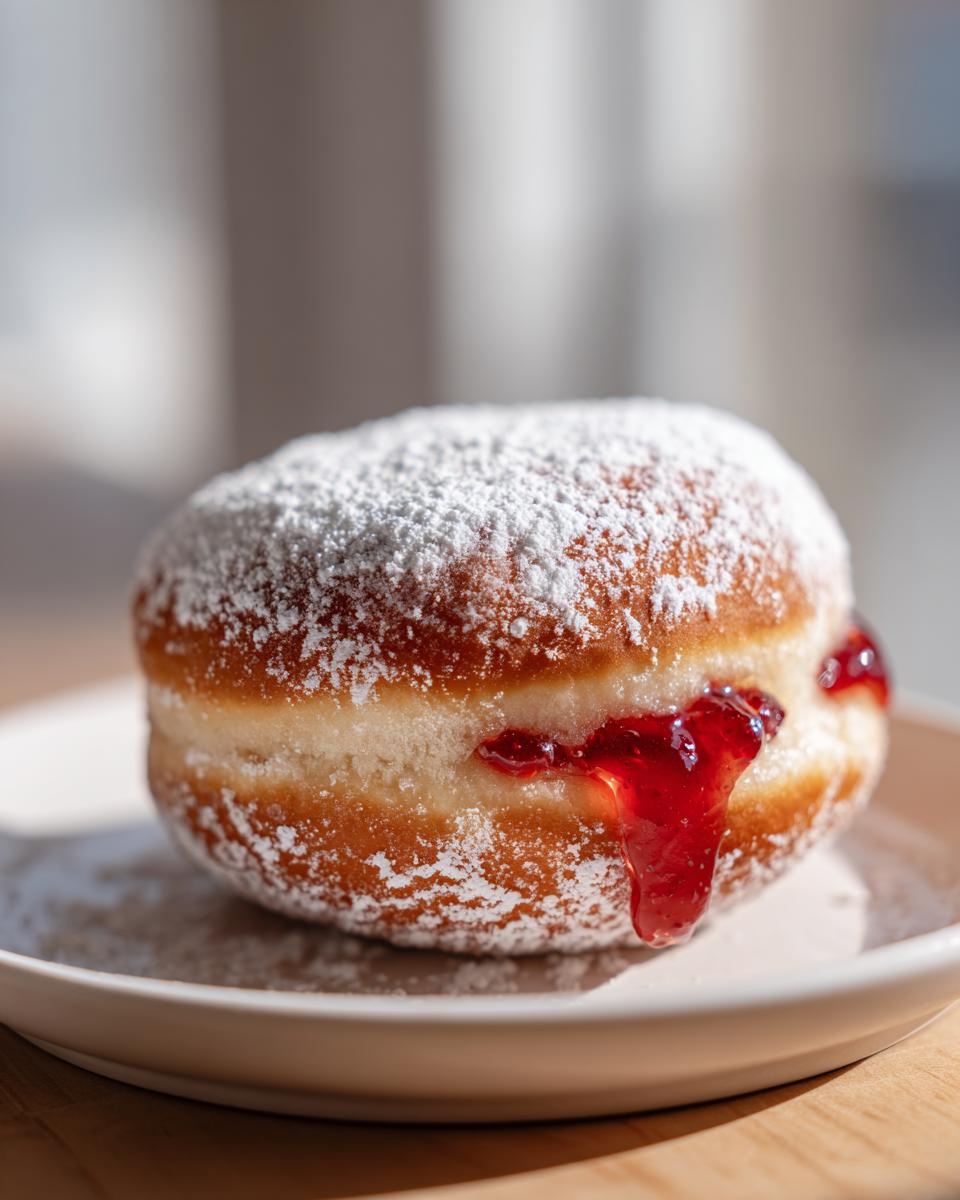
Mastering the Fry: Oil Temperature and Technique for Sufganiyot
I cannot stress this enough: you absolutely need a deep-fry thermometer for these fried jam donuts. We are aiming for a steady 350°F (175°C). If it’s too cold, your dough soaks up oil like a sponge and becomes greasy. If it’s too hot, the outside turns dark brown in seconds, and the inside is still raw dough—nobody wants that!
When you drop in a batch of your puffy dough rounds, only do three or four at a time. Crowding the pot drops the oil temperature instantly. Fry them until they look like perfectly puffed, golden pillows on the first side, about 90 seconds, then flip gently. They cook fast, so stick right there by the stove! Once golden on both sides, pull them out onto paper towels immediately. This temperature control is the real secret to amazing Sufganiyot.
The Art of Filling These Fried Jam Donuts
This is the grand finale! You don’t want to tear a hole in your beautiful, light yeast jelly donut when you inject the filling. Make sure your doughnuts have cooled down just a bit so you don’t burn your fingers. If your jam is chunky or stiff, microwave it for maybe 10 or 15 seconds—just enough to make it squirtable, but not hot.
Use a piping bag with a long, thin tip. Poke it into the side of the doughnut, deep into the center, and start squeezing slowly. You’ll feel the weight change as the inside fills up. Do not overfill, or the jam will burst out the back when you squeeze! Stop when you think it’s perfect, and pull the tip out smoothly. A quick dusting of powdered sugar, and you’re done!

Tips for Success with Your Homemade Sufganiyot
Look, I’ve made plenty of sad-looking, flat, or greasy doughnuts in my time trying to master these Sufganiyot. So, let me save you some heartache with a few non-negotiable rules! First, that second rise after you cut the shapes? You absolutely must do it. If you skip that rest, your doughnuts won’t puff up in the oil; they’ll just spread out and absorb grease. They need to look puffy before they hit the heat.
Second, the sticking issue. When you cut out your rounds, don’t stack them up! That’s inviting dough disaster. Place them on individual squares of parchment paper on the baking sheet. This way, when you lift them to drop them into the oil, they hold their perfect shape. You can just lift the parchment slightly and slide it out of the way.

Finally, use way more oil than you think you need. Trying to shallow-fry these Sufganiyot only results in one side being perfectly cooked and the other side looking sad and pale. We need that deep pool of oil so they float freely and cook evenly top-to-bottom right away.
Serving Suggestions for Hanukkah Jelly Doughnuts
Now that you have these perfect, warm Sufganiyot, what’s the move? Honestly, they are best served immediately while they are still slightly warm from the oil and the powdered sugar is melting just a little bit on top. Black coffee is the ideal partner—the bitterness cuts right through the sweetness of the raspberry or strawberry jam.
If you want an extra flourish, try a quick drizzle of chocolate ganache instead of just the sugar dust. Or, if you’re craving something richer after all that frying, grab one of my amazing coffee cake muffin recipes for breakfast the next morning!
Storage and Reheating Instructions
The honest truth about any great yeast jelly donut? They are 100% best eaten the day you make them. That first light, pillowy bite just can’t be beaten the next day. However, if you somehow end up with leftovers—which happens, I guess—you want to store them airtight at room temperature. Don’t even think about the fridge; that’s a texture killer!
If you must revive them slightly the next day, skip the microwave! It makes them tough. Instead, pop your leftover Sufganiyot onto a sheet pan for just about 4 or 5 minutes in a 300°F oven. It warms them up just enough to soften the dough again before you re-dust them heavily with fresh powdered sugar. That’s the trick for day two!
Frequently Asked Questions About Sufganiyot
I always get so many questions when I post photos of these babies! They are totally worth the effort, but frying always makes people nervous. Here are the things folks ask me most about making these delicious Hanukkah jelly doughnuts at home.
Why are my Sufganiyot turning out flat?
Nine times out of ten, it’s the second rise! You absolutely have to let those cut-out dough rounds puff up again until they look noticeably airy and swollen—that puffiness is what expands in the hot oil, creating the perfect shape. If you drop flat dough into the oil, you just get flat, oily doughnuts, which is not the goal for a beautiful yeast jelly donut!
How do I know when the dough has risen enough the first time?
You need a reliable “doubled in size” indicator. Stick a piece of tape next to the dough in the oiled bowl when you put it to rest so you have a clear visual marker. If you gently poke the side of the dough with a floured finger, the dent should spring back slowly. If it springs back immediately, it needs more time. If it collapses, you may have proofed it too long!
Can I make the dough ahead of time?
You totally can! After the first rise, you can punch the dough down, wrap it tightly in plastic wrap, and keep it in the fridge for up to 24 hours. When you’re ready to roll and cut, just let the cold dough sit on the counter for about 30 minutes to take the chill off before cutting your shapes. It makes the whole process less hectic!
Can I bake these instead of frying?
Oh, you can try, but it just won’t be the same authentic experience. Baking these Sufganiyot will give you something closer to a sweet bread roll. The deep-fried exterior is what gives the traditional doughnut that signature texture that pairs perfectly with the jam center.

If you’re looking for lighter breakfast options that don’t use a deep fryer, check out my guide to simple breakfast ideas instead!
Estimated Nutritional Data for Sufganiyot
Okay, let’s talk reality after all that joyful frying! Since these are handmade Sufganiyot made with love (and oil!), these numbers are just my best estimate based on the recipe ratios. I’m using the data provided below, but remember, the jam you choose and how much you dust them with sugar will change things!
- Serving Size: 1 doughnut
- Calories: 280
- Fat: 14g
- Carbohydrates: 35g
- Protein: 5g
Please take this as a fun guide, not a strict requirement for your Hanukkah jelly doughnuts! Your brand of flour or jam can make a difference, so treat this table as a helpful ballpark figure for this amazing dessert.
Share Your Holiday Doughnut Creations
I absolutely love seeing your holiday kitchens in action! Every messy, sugar-dusted photo you send warms my heart. Once you’ve filled and dusted your batch of Sufganiyot, please come back here and let me know how the dough rose for you, and what kind of jam you picked!
Rate the recipe below so others know how much joy these *fried jam donuts* bring to your celebration. If you have a kitchen disaster story or a brilliant shortcut, don’t be shy—drop it in the comments section, or you can reach out directly via my contact page!
PrintClassic Hanukkah Sufganiyot (Jelly Doughnuts)

Make light, pillowy, jam-filled sufganiyot at home for Hanukkah. This recipe guides you through making the enriched yeast dough, frying them golden, and filling them with sweet jelly.
- Prep Time: 45 min
- Cook Time: 25 min
- Total Time: 145 min
- Yield: About 16 doughnuts 1x
- Category: Dessert
- Method: Deep Frying
- Cuisine: Israeli
- Diet: Vegetarian
Ingredients
- 1 cup whole milk, warmed to 105-115°F
- 2 1/4 teaspoons active dry yeast
- 1/4 cup granulated sugar, plus 1 teaspoon for yeast
- 3 large eggs, room temperature
- 1 teaspoon vanilla extract
- 1/2 teaspoon salt
- 4 cups all-purpose flour, plus more for dusting
- 1/4 cup unsalted butter, softened
- Vegetable oil, for frying (about 4-6 cups)
- 1 cup strawberry or raspberry jam
- Powdered sugar, for dusting
Instructions
- Activate the yeast: In a large bowl, combine the warm milk, 1 teaspoon of sugar, and the yeast. Let stand for 5 to 10 minutes until foamy.
- Mix the dough: Add the remaining sugar, eggs, vanilla extract, and salt to the yeast mixture. Whisk briefly. Gradually add the flour, mixing until a shaggy dough forms.
- Knead: Turn the dough onto a lightly floured surface. Knead for 8 to 10 minutes until smooth. Add the softened butter and knead for another 5 minutes until fully incorporated and the dough is elastic.
- First Rise: Place the dough in a lightly oiled bowl, turning to coat. Cover the bowl with plastic wrap and let it rise in a warm place for 1 to 1.5 hours, or until doubled in size.
- Shape the doughnuts: Gently punch down the risen dough. Roll the dough out to a 1/2-inch thickness on a lightly floured surface. Use a 3-inch round cutter to cut out doughnut shapes. Place the rounds on parchment-lined baking sheets.
- Second Rise: Cover the cut dough rounds loosely with plastic wrap or a clean kitchen towel. Let them rest for 30 to 45 minutes until puffy.
- Heat the oil: Pour vegetable oil into a deep, heavy-bottomed pot or Dutch oven to a depth of about 2 inches. Heat the oil to 350°F (175°C). Use a thermometer to maintain this temperature.
- Fry the sufganiyot: Carefully drop 3 or 4 doughnuts into the hot oil, making sure not to crowd the pot. Fry for 1 to 2 minutes per side until deep golden brown. They should cook through without burning.
- Drain: Use a slotted spoon to remove the doughnuts and place them on a wire rack lined with paper towels to drain excess oil.
- Fill the doughnuts: Once the doughnuts are cool enough to handle, use a piping bag fitted with a long, thin tip (or a sharp knife to make a small hole) to inject about 1 to 2 tablespoons of jam into the center of each doughnut.
- Finish: Dust generously with powdered sugar before serving.
Notes
- Maintain the oil temperature between 340°F and 360°F for best results. If the oil is too cool, the doughnuts absorb too much oil; if too hot, the outside burns before the inside cooks.
- For easy filling, heat your jam slightly in the microwave for 15 seconds to make it easier to pipe.
- If you do not have a round cutter, you can use a drinking glass.
Nutrition
- Serving Size: 1 doughnut
- Calories: 280
- Sugar: 18g
- Sodium: 150mg
- Fat: 14g
- Saturated Fat: 4g
- Unsaturated Fat: 10g
- Trans Fat: 0g
- Carbohydrates: 35g
- Fiber: 1g
- Protein: 5g
- Cholesterol: 55mg