
There is nothing in this world that whispers ‘weekend morning’ quite like the sound of batter hitting a hot griddle. Forget those sad, flat disappointments—we’re here to make truly epic, picture-perfect buttermilk pancakes that stand tall and soak up syrup like sponges. That’s the whole point of what we do here at Kitchen Slang! Zoe believes that the tricks chefs use shouldn’t be locked behind swinging kitchen doors, and that perfect fluffiness is totally achievable on your home stovetop. Trust me, these American buttermilk pancakes are easy, they are tangy, and they bring instant happiness to the breakfast table.
We’re translating that elite level of pancake perfection just for you. Ready to pile yours impossibly high? Check out our favorite simple breakfast ideas for inspiration later!
- Why This Buttermilk Pancakes Recipe Delivers Fluffy Perfection
- Gathering Your Ingredients for Perfect Buttermilk Pancakes
- Mastering the Batter: Mixing for Tender Buttermilk Pancakes
- Griddling Techniques for Diner-Style Pancakes
- Tips for Success with American Buttermilk Pancakes
- Serving Suggestions for Your Stack of Buttermilk Pancakes
- Storage and Reheating Buttermilk Pancakes
- Frequently Asked Questions About Buttermilk Pancakes
- Estimated Nutritional Data for Buttermilk Pancakes
Why This Buttermilk Pancakes Recipe Delivers Fluffy Perfection
These aren’t just any pancakes; these are the kind that stack up like something you see in a postcard. The secret, honestly, is leaning into the science behind the buttermilk. We don’t just dump things in a bowl and hope for the best. We use that classic reaction to get that lift we all crave. That’s the translator wisdom coming through – knowing the ‘why’ makes you a better cook!
Here’s what sets this fluffy pancake recipe apart:
The Science Behind Fluffy Buttermilk Pancakes
Buttermilk is slightly acidic, right? When that acid hits the baking soda we added to the dry mix, it fizzes instantly! That’s what creates those beautiful trapped air pockets. It’s what separates a tender pancake from a flat hockey puck. Baking powder helps too, but the buttermilk is that real magic boost.
Tips for Easy Breakfast Pancakes
- The prep is super fast, which is awesome when you have hungry mouths waiting.
- We rely on pantry workhorses—nothing exotic needed to make these easy breakfast pancakes.
- Because we’re careful not to overmix, the end result is always beautifully tender.
Gathering Your Ingredients for Perfect Buttermilk Pancakes
Okay, let’s get down to what you need for these show-stopping flapjacks. Like any great recipe, if your starting materials aren’t right, the outcome can be a little iffy. We use standard cupboard stuff here, but the precision in the amounts matters a lot for that perfect rise. We’re aiming for those thick, fluffy results, so measure carefully!
Here’s what you need to pull out of the pantry:
- 2 cups all-purpose flour
- 2 tablespoons granulated sugar
- 2 teaspoons baking powder
- 1 teaspoon baking soda
- 1 teaspoon salt
- 2 large eggs
- 2 cups buttermilk
- 4 tablespoons unsalted butter, melted, plus more for the griddle
Ingredient Notes and Substitutions for Buttermilk Pancakes
Now, what if you open the fridge and there’s no buttermilk? Don’t run to the store! This is one of those great kitchen tricks Zoe teaches. If you are out, mix 2 tablespoons of white vinegar or fresh lemon juice into 2 cups of regular milk. Just let it sit on the counter for five minutes. It gets all lovely and curdled—that’s your homemade buttermilk. It works nearly every time for our buttermilk pancakes!
Mastering the Batter: Mixing for Tender Buttermilk Pancakes
If you want those magnificent, tender homemade buttermilk flapjacks that melt in your mouth, you have to treat the mixing process gently. This is where most people mess up their breakfast! Seriously, put down the electric mixer; we are using a spatula here. Overmixing is the enemy of fluffiness. When you mix the wet and dry ingredients too much, you wake up the gluten in the flour, and gluten creates chewiness. We want soft and tender, not rubbery!
When you pour the wet stuff into the dry stuff—the eggs, buttermilk, and melted butter mixed together—just fold it. I mean *gently* fold. Stop stirring when you still see streaks of flour—I know it feels wrong, but trust me. A few lumps are not only okay, they are the secret handshake to a great pancake. If you’re aiming for delicate layers, go light on the agitation. You can check out some of our other tips for working efficiently in the kitchen over at our guide on weekday efficiency, but for now, focus on delicate mixing.

The Crucial Step: Resting the Buttermilk Pancakes Batter
Once you’ve stopped mixing (and I mean really stopped!), you have to let the batter hang out for about five to ten minutes. This is part of what sets us apart from a standard fluffy pancake recipe. During this rest, the acid in that buttermilk gets busy reacting with the baking soda. You’ll literally see tiny little bubbles starting to form on the surface, which means the rise is activating!
Do not skip this rest! If you start pouring immediately, you miss out on that beautiful internal lift. When you come back to the bowl, it might look a little frothier. If you still see a few pockets of dry flour, that’s totally fine. Just give it one or two gentle turns with the spatula to incorporate, and then you are ready for the griddle. Patience truly pays off here.
Griddling Techniques for Diner-Style Pancakes
Alright, the batter is rested, the magic bubbles have formed—now we move to the heat! This is where we pull out the professional know-how to give you those gorgeous, evenly colored diner-style pancakes. Remember what I said about translating pro tips? Well, chefs are obsessed with temperature control. If your pan is too hot, the outside burns before the middle cooks, and you end up with a black shell and liquid center. Not today!
Get your skillet or griddle heating over medium heat. You need to find that sweet spot where the pan is hot enough to sizzle, but not so hot it smokes immediately. A great line cook trick I picked up is to test it: drop a tiny bit of water on the surface. If it sizzles immediately but the water evaporates cleanly, you’re golden. Too slow, crank it up a touch. Too fast, kill the heat for thirty seconds and bring it back down.
How to Know When to Flip Your Buttermilk Pancakes
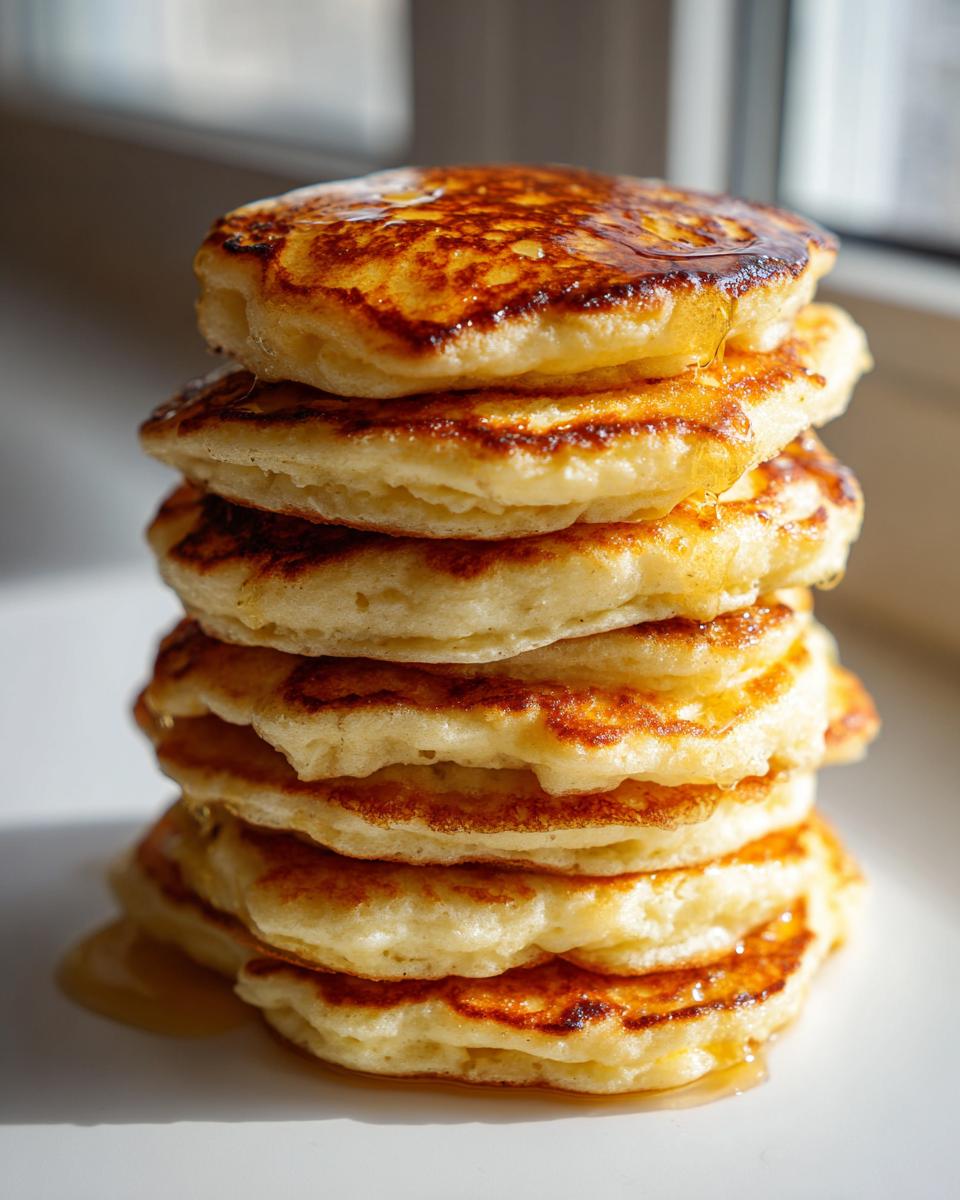
Don’t lift the edge every two seconds; that messes up the cooking surface! For our standard batch, we’re pouring about 1/4 cup of batter per cake. Once that batter is down, you wait. You are looking for two big signs on top. First, you’ll see little bubbles forming all over the surface, kind of like it’s starting to freckle. Second, and this is key, you need to see the edges start to look dry and set, like they’ve hardened up a bit. That’s your cue!
When those signs appear, usually after about two or three minutes, slide your spatula carefully underneath. If it’s beautifully golden brown across the whole bottom, give it a confident flip. The second side cooks much quicker, usually just another minute or two, until it’s just kissed with that sweet brown color.
Tips for Success with American Buttermilk Pancakes
We are so close to being done here, and I want to make sure these American buttermilk pancakes are absolutely flawless before you lift that spatula for the final time. It all comes down to consistency. If you’re cooking for a crowd, this is crucial. Don’t be tempted to use cooking spray; it burns too quickly and leaves a weird residue that affects the browning.
Always use a knob of real butter for each fresh batch of pancakes you throw onto the griddle. It imparts flavor, and the slight milk solids help achieve that gorgeous, even color we are aiming for. If you notice the pancakes are browning unevenly, it means your heat is fluctuating. Keep an eye on it and adjust your burner setting slightly between batches.

Remember, every bit of this knowledge—the heat consistency, the gentle folding—is professional wisdom translated for your kitchen. If you want to read more about our philosophy of kitchen translation, feel free to check out our About Page!
Serving Suggestions for Your Stack of Buttermilk Pancakes
You did it! The pancakes are golden and perfectly fluffy—now don’t let them sit and deflate! These beautiful buttermilk pancakes need to be served right away while they are at their peak texture. Maple syrup is a non-negotiable classic, of course, but let’s talk about toppings that really pop against that slight buttermilk tang.
Along with plenty of fresh butter, try topping them with a light dusting of powdered sugar mixed with a tiny bit of cinnamon. Or, for something unexpected, whip up some lemon curd! That tartness plays beautifully with the acidity in the cake base. You can find some fun dessert ideas, like how to make flavored syrups, over on our Desserts page!

Storage and Reheating Buttermilk Pancakes
Even the best breakfast sometimes yields too many amazing pancakes, right? Don’t worry about leftovers because these buttermilk pancakes keep really well if you store them properly. You want to cool them completely first—put them on a wire rack, not stacked right away, so condensation doesn’t make them soggy.
Once they are totally cool, stack them up and place them in an airtight container or a heavy-duty freezer bag. They keep great in the fridge for about three days, or you can freeze them flat with parchment paper between layers for up to two months.
When you reheat them, please, skip the microwave if you can! Microwaving turns these beautiful, fluffy cakes a little hard. The best way to bring them back to life is right in the oven set to about 350°F (175°C) for about 5 to 8 minutes until they are warm all the way through. That keeps that tender crumb nice and soft, just like when they first came off the griddle.
Frequently Asked Questions About Buttermilk Pancakes
I get so many questions whenever I post photos of these stacks! It’s funny how something that seems so simple—just batter and heat—can have so many little nuances. Here are a few questions I hear all the time about getting the texture and flavor just right for these American classics.
Can I substitute regular milk for buttermilk in this fluffy pancake recipe?
You totally can, but you are losing half the magic! If you use regular milk, you won’t get the characteristic tang that really defines true buttermilk pancakes, and the rise won’t be quite as powerful either, because the acid isn’t there to activate the baking soda so well. If you must substitute, go back up to the ingredient notes and make my quick buttermilk substitute—milk plus a teaspoon of acid. That gets you much closer to the real deal for this fluffy pancake recipe.
What is the best flour to use for these griddle cakes?
For this recipe, I stick to a good quality all-purpose flour. It gives us that perfect, sturdy yet tender crumb that holds up well to syrup, which you need for satisfying diner-style pancakes. Now, if you’re *really* chasing delicacy, I’ve experimented some with cake flour. Cake flour has less protein, so it develops less gluten, meaning a whisper lighter result. But honestly, for everyday easy breakfast pancakes, all-purpose is your reliable friend!
Got more questions I didn’t cover? Feel free to reach out on our contact page!
Estimated Nutritional Data for Buttermilk Pancakes
Okay, so while the main focus here is definitely on the sheer joy of eating these fluffy cakes, it’s always good to have a rough idea of what’s in that stack, right? Remember what Zoe always says: cooking should be intuitive, not intimidating! So take this information as a ballpark estimate, because the exact numbers can bump around depending on how big your eggs are or what brand of butter you use.
This data assumes you are dividing the finished recipe into about 12 pancakes—so, this is the breakdown for a single, perfect pancake. It’s a good, solid breakfast that packs decent protein without wrecking your sugar intake for the day.
- Serving Size: 1 pancake
- Calories: Roughly 180
- Fat: About 6 grams (with 3 grams of that being saturated fat)
- Carbohydrates: Approximately 26 grams
- Sugar: Around 4 grams
- Protein: 6 grams
- Fiber: 1 gram
Just a quick note, though: this estimate doesn’t include any toppings! Pouring on half a cup of syrup will definitely change these numbers significantly. But for the pancake itself, that’s what we are looking at. Enjoy!
PrintFluffy Buttermilk Pancakes
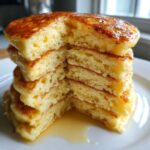
Make tender, slightly tangy, picture-perfect buttermilk pancakes with this easy recipe for a classic American breakfast.
- Prep Time: 10 min
- Cook Time: 15 min
- Total Time: 25 min
- Yield: About 12 pancakes 1x
- Category: Breakfast
- Method: Griddling
- Cuisine: American
- Diet: Vegetarian
Ingredients
- 2 cups all-purpose flour
- 2 tablespoons granulated sugar
- 2 teaspoons baking powder
- 1 teaspoon baking soda
- 1 teaspoon salt
- 2 large eggs
- 2 cups buttermilk
- 4 tablespoons unsalted butter, melted, plus more for the griddle
Instructions
- Combine the dry ingredients: In a large bowl, whisk together the flour, sugar, baking powder, baking soda, and salt.
- Combine the wet ingredients: In a separate medium bowl, whisk the eggs lightly. Whisk in the buttermilk and the melted butter until just combined.
- Mix the batter: Pour the wet ingredients into the dry ingredients. Gently fold them together using a spatula until the batter is just combined. Do not overmix; a few lumps are fine. Overmixing develops gluten and makes tough pancakes.
- Rest the batter: Let the batter sit for 5 to 10 minutes. This allows the baking soda and buttermilk to react, creating air bubbles for fluffier pancakes.
- Heat the griddle: Heat a large non-stick griddle or skillet over medium heat. Lightly grease the surface with butter. The griddle is ready when a drop of water sizzles and evaporates quickly.
- Cook the pancakes: Pour about 1/4 cup of batter onto the hot griddle for each pancake. Cook for 2 to 3 minutes, or until bubbles appear on the surface and the edges look set.
- Flip and finish: Flip the pancakes and cook for another 1 to 2 minutes until golden brown on the underside and cooked through.
- Serve immediately: Stack the pancakes and serve hot with your preferred toppings.
Notes
- For even browning, maintain a consistent medium heat on your griddle. If they brown too fast, lower the heat.
- If you do not have buttermilk, mix 2 tablespoons of white vinegar or lemon juice into 2 cups of regular milk and let it sit for 5 minutes before using.
- If you want richer flavor, use slightly more melted butter in the batter.
Nutrition
- Serving Size: 1 pancake
- Calories: 180
- Sugar: 4
- Sodium: 350
- Fat: 6
- Saturated Fat: 3
- Unsaturated Fat: 3
- Trans Fat: 0
- Carbohydrates: 26
- Fiber: 1
- Protein: 6
- Cholesterol: 55